As with many Swiss companies, PX Group’s historical watchmaking know-how has been the key technological driver behind its diversification. Until the late 1990s, consummate expertise in shaping ultra-high-precision tubular components was required to manufacture watch bands made up of hollow preformed and brazed links. This expertise has enabled the Group to master the process of forming thin tubes, manufacturing extremely thin walls and producing complex geometries, while also ensuring dimensional regularity and impeccable quality. This precision culture, inherited from the watchmaking industry, has naturally paved the way for new high-value-added applications in niche markets, such as the medical sector, with PX Group leveraging this know-how to pivot into the creation of tubes for endoscopy. In doing so, it is pushing the technical boundaries even further with the development of variable-section tubes, meeting the most demanding requirements.
Marker bands and electrodes
Drawing also on its internal expertise in casting and precious-metal processing, the Group has extended its expertise to marker bands and electrodes. These components – key to the proper functioning of medical devices for use inside the human body – enable specific functions such as positioning, measurement and signal transmission.
Marker bands are used in catheters, stents and other implantable devices. Being radiopaque, they are visible under X-rays. This allows healthcare professionals to position and track them accurately during procedures.
Like electrodes, marker bands also serve as electrical contacts to ensure reliable connectivity in devices such as pacemakers. The materials used are highly conductive and resistant to corrosion, resulting in long-lasting performance. These components also help ensure the precision of measuring devices, thus guaranteeing the reliability of the tools used to monitor vital signs and assess treatments.
High-precision production using quality materials
The materials used in the production of marker bands and electrodes are selected for their superior electrical, mechanical and bio-compatible properties. Some of the most commonly used alloys are:
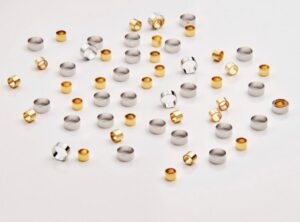 PX Group offers components made from platinum, gold and palladium (source: PX Group).
The in-house refining process delivers high levels of durability, precision and bio-compatibility, making these products the perfect choice for sophisticated medical applications.
PX Group produces fully traceable, customisable rings with a length ranging from 0.4 to 20 mm, an external diameter from 0.3 to 4 mm and a wall thickness of up to 25 microns (around one-third of the thickness of a hair). This level of precision required the continuous improvement of industrial processes, particularly in high-precision laser cutting. The company is also working on developing fine polishing solutions tailored to the extreme requirements of these applications.
Investment in production facilities
In 2025, PX Group acquired a third laser to meet growing demand: a femtosecond laser which will enable the Group to combine its expertise in laser machining and small-diameter wires to ensure optimal precision.
This investment opens up new prospects in this market, with the new machine enabling the company to double its production of marker bands and medical electrodes.
You can find PX Group at stand J55 at EPHJ 2026.
https://pxgroup.com/en/home/medical/