News

News

EllistatMed innovates to better trace non-conformities

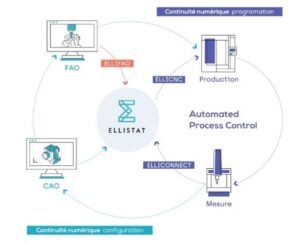
EllistatMed innovates to better trace non-conformities Publié le février 18, 2025 Software innovation for quality in production, with machine learning and automation modules for the adjustment process of machine tools, meeting the strict standards of the watch and medical industry, and offering a significant reduction in workshop returns through traceability and the detection of non-conformities in real-time. Ellistat offers innovative additional modules, including Data Analysis in a web version and APC (Automated Process Control). Data Analysis machine learning algorithms enable an understanding of the origin of machine drifts or to statistically differentiate suppliers. The APC module automates the machine tool adjustment process to achieve compliance from the first machined part. Faced with strict standards, such as ISO 13485 and the American standard CFR21 part II, the Ellistat software meets the strictest requirements, in particular in terms of traceability, real-time production monitoring and detection of non-conformities. According to David Scarpino, co-CEO of Bien-Air Surgery, the use of Ellistat software has resulted in a 50% reduction in workshop returns. He aims for 0% return through the total implementation of the APC module. The artificial intelligence in the software controls only and automatically what is necessary, thereby optimizing control efficiency within the company. Discover EllistatMed Share this article Facebook Twitter Youtube News 25 avril 2025 Emissa dévoile le Precimill, un centre d'usinage compact et performant 20 mars 2025 CMT RICKENBACH – Photochemisches Ätzen: ein subtiles Verfahren für flache Bauteile 20 mars 2025 WatchDec – die Hochpräzision im Dienst der Medizintechnik 20 mars 2025 PRECITRAME – Eine flexible Mikromaschine für Kleinserien miniaturisierter Bauteile Show all the articles

News

Dixi Polytool launches a new Dixi 1137 Drycut 5D and 8D drill for machining lead-free brass

Dixi Polytool launches a new Dixi 1137 Drycut 5D and 8D drill for machining lead-free brass Publié le février 12, 2025 Innovation for the machining of lead-free brass, offering a reduction in cutting forces of more than 30%, negligible wear and superior hole quality, compliant with European Reach directives. The new series of Dixi 1137 Drycut 5D and 8D drills has been developed specifically for machining lead-free brass. Test results show a reduction in cutting forces of more than 30% and negligible wear after 900 holes in 170Hv CuZn37 brass. The quality of the holes is higher than that of conventional drill bits, with no burrs and no sticking. This innovation is important because the European reach directives threaten the use of lead in brass alloys, especially in the jewellery sector. Alloy producers are reducing lead levels and cutting tool manufacturers are having to adapt to more difficult machining conditions. Dixi 1137 Drycut 5D and 8D drill bits are effective in non-ferrous materials, and stainless or high-alloy steels. Discover Dixi Polytool Share this article Facebook Twitter Youtube News 25 avril 2025 Emissa dévoile le Precimill, un centre d'usinage compact et performant 25 mars 2025 Medtech – a rapidly expanding part of the EPHJ Show 20 mars 2025 CMT RICKENBACH – Photochemisches Ätzen: ein subtiles Verfahren für flache Bauteile 20 mars 2025 WatchDec – die Hochpräzision im Dienst der Medizintechnik Show all the news

News

Codatic launches Watch 512, a revolutionary watch design interface

Codatic launches Watch 512, a revolutionary watch design interface Publié le février 10, 2025 A revolutionary watch design interface that uses AI to quickly and accurately bring design ideas to life, adhering to the aesthetic codes and functions of a base model, while providing complete confidentiality through a dedicated server. Watch512 is an innovative interface that uses an algorithm combining multiple artificial intelligences to quickly and intuitively create watch images and pre-project aesthetics. This simplified interface can be configured specifically for each brand, integrating its DNA markers, aesthetic codes and designs, enabling the realization of ideas and shortening the exchange phases between the various stakeholders involved in the creation of new collections. Watch512 offers unique precision and quality results, faithfully retaining the shape and functions of a starting model while providing a deliberately different style from or variations of an existing model. The possible inputs are multiple, ranging from a simple photo to a 3D technical drawing or a sketch. Watch512 is developed by Codatic, a pioneering company in continuous R&D mode that guarantees total confidentiality via a “home” server. Discover Watch 512 Share this article Facebook Twitter Youtube News 25 avril 2025 Emissa dévoile le Precimill, un centre d'usinage compact et performant 25 mars 2025 Medtech – a rapidly expanding part of the EPHJ Show 20 mars 2025 CMT RICKENBACH – Photochemisches Ätzen: ein subtiles Verfahren für flache Bauteile 20 mars 2025 WatchDec – die Hochpräzision im Dienst der Medizintechnik Show all the news

News

Beckhoff innovates with MX-System

Beckhoff innovates with MX-System Published on the février 4, 2025 The MX system includes base plates in three sizes, equipped with standardized interfaces for direct attachment to the machine and visual and functional integration into the installation space. The base plates serve as an electrical and mechanical interface for housing the modules. They have data and power interfaces depending on the size. Base plates are available with a minimum of six and a maximum of 24 slots, configurable in steps of two slots. Compatible modules depend on the size of the base plate and its connectors. All three sizes are available in variants for maximum flexibility and application optimisation. Discover the produits Share this article Facebook Twitter Youtube News 25 avril 2025 Emissa dévoile le Precimill, un centre d'usinage compact et performant 25 mars 2025 Medtech – a rapidly expanding part of the EPHJ Show 20 mars 2025 CMT RICKENBACH – Photochemisches Ätzen: ein subtiles Verfahren für flache Bauteile 20 mars 2025 WatchDec – die Hochpräzision im Dienst der Medizintechnik Show all the news

News

Swiss watch exports in 2024: poorer performance than in 2023, with significant disparities

Swiss watch exports in 2024: poorer performance than in 2023, with significant disparities Published on the février 4, 2025 2024 was a year of very marked contrasts for the Swiss watchmaking industry, both in terms of trends in its main markets and the performance of key actors in the sector. Export statistics only partially reflect the significant disparities between the results of different watchmaking firms. Moreover, they cannot provide any direct information on subcontracting, which remains primarily focused on the Swiss market. On average, Swiss watch exports recorded a decline of 2.8% compared with 2023, achieving a total of 26.0 billion francs. This trend was consistent throughout the year, without any notable fluctuations. It follows three years of steady growth and suggests an economic slowdown in demand for luxury personal items, particularly among so-called aspirational customers. It also illustrates heightened competition in the entry-level and mid-range segments. Only a small proportion of watches managed to perform well and contribute to improving the overall results. Conversely, many products suffered a significant decline, much more marked than the average of -2.8%. The contraction in demand, which was heavily influenced by China and the Special Administrative Region of Hong Kong, was reflected in a fall in orders for some suppliers operating as subcontractors. Jobs were maintained in 2024, as indicated in the survey by the Employers’ Federation of the Swiss watch industry, thanks to measures such as reduced working hours. Nonetheless, watchmaking firms have already shared their concerns for 2025. Any recovery in the market will depend largely on the outlook in China, where uncertainty remains high. There is currently nothing to suggest a turnaround in 2025, although the decline should be less marked. Swiss watch exports are therefore likely to continue on last year’s downward trend, while the gaps between different actors in the sector will remain very marked.. ProductsWatches account for the majority of exports in the watchmaking sector. Their total value fell by 2.8% compared with 2023, to 24.8 billion francs. Following a bright spell in the previous year, the number of items declined by 9.4%, or 1.6 million fewer units. Volumes were at a historically low level, with 15.3 million watches exported. Watches with an export price below 3,000 francs recorded a decline in export turnover of 15.6%. The slight increase (+1.0%) in the higher price segment, despite accounting for more than 80% of the total value, was not sufficient to offset the downturn. The negative result was primarily attributable to steel watches (-9.8% by value), while watches made from precious metals reversed the trend (+2.2%). However, the growth in this area was mainly due to a price effect, insofar as the number of items fell by 5.1% for this group of materials. MarketsNorth and South America were the most dynamic market (+5.4%) and accounted for a fifth of Swiss watch exports in 2024. Performance in Asia fell by 7.6%, impacted by the significant downturn in China and the Special Administrative Region of Hong Kong. Europe (-0.1%), conversely, maintained its high level of 2023. The United States (+5.0% compared with 2023) again strengthened its position as the sector’s leading market, after four years of steady growth. The outlook there remains favourable. In Asia, China (-25.8%) saw a stronger contraction than during the Covid pandemic, taking it close to its results in 2019. Similarly, the Special Administrative Region of Hong Kong (-18.7%) suffered from lacklustre demand and lost its third place in the world ranking. Japan (+7.8%), buoyed mainly by tourist purchases, rose to third position and was one of the most dynamic markets for Swiss watch exports. Singapore (-2.1%) was in line with the global average, while South Korea (+8.7%) benefited from a favourable base effect to offset the decline seen in 2023. The contrasts in Europe were less marked, with results in the United Kingdom (-1.6%), France (+2.5%), Germany (-3.8%) and Italy (-1.6%) falling within a narrower range. Share this article Facebook Twitter Youtube News 25 avril 2025 Emissa dévoile le Precimill, un centre d'usinage compact et performant 25 mars 2025 Medtech – a rapidly expanding part of the EPHJ Show 20 mars 2025 CMT RICKENBACH – Photochemisches Ätzen: ein subtiles Verfahren für flache Bauteile 20 mars 2025 WatchDec – die Hochpräzision im Dienst der Medizintechnik Show all the news Share this article Facebook Twitter Youtube
News

Bruker Alicona measures even more accurately with the new µCMM

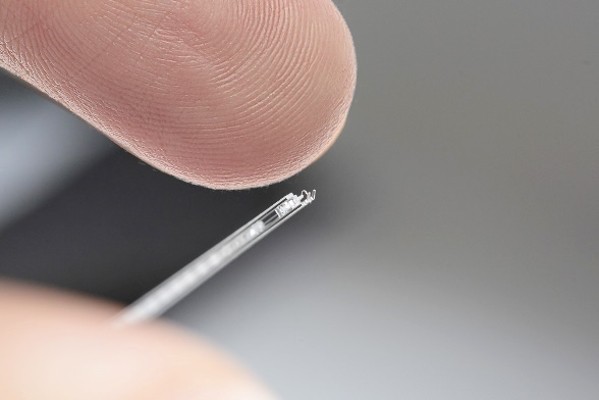
Bruker Alicona measures even more accurately with the new µCMM Published on the février 4, 2025 The new µCMM Alicona is the most accurate optical three-dimensional measuring machine in its class. Based on Focal Variation technology, it has all the advantages of optical technology, especially for the high-resolution measurement of components with steep sides and high reflectivity. Insensitive to vibrations, it allows acquisitions with a high density of measurement points. It allows operators to take fully automated dimensional, position, shape and roughness measurements of their parts. Discover Alicona Share this article Facebook Twitter Youtube News 25 avril 2025 Emissa dévoile le Precimill, un centre d'usinage compact et performant 25 mars 2025 Medtech – a rapidly expanding part of the EPHJ Show 20 mars 2025 CMT RICKENBACH – Photochemisches Ätzen: ein subtiles Verfahren für flache Bauteile 20 mars 2025 WatchDec – die Hochpräzision im Dienst der Medizintechnik Show all the news
News

Acsys: Multishift Laser Processing System

Acsys: Multishift Laser Processing System Published on the janvier 27, 2025 MULTISHIFT® combines fully automatic processing with high-precision robotic handling. The system can accommodate up to 20 pallets containing loose or placed parts. The integrated robotic system routes them to laser machining with precision through high-resolution camera systems and optical part recognition from ACSYS. Fully automatic machining of parts on multiple faces is possible with maximum precision because the body of the MULTISHIFT® machine is also composed of high-strength steel and granite. This ensures excellent results. Discover the multishift d’Acsys Share this article Facebook Twitter Youtube News 25 avril 2025 Emissa dévoile le Precimill, un centre d'usinage compact et performant 25 mars 2025 Medtech – a rapidly expanding part of the EPHJ Show 20 mars 2025 CMT RICKENBACH – Photochemisches Ätzen: ein subtiles Verfahren für flache Bauteile 20 mars 2025 WatchDec – die Hochpräzision im Dienst der Medizintechnik Show all the news Share this article Facebook Twitter Youtube

News

New CLA, compensation, training and the attractiveness of the sector, … An exclusive interview with Ludovic Voillat, Secretary General of the Employers’ Convention of the Swiss Watch Industry

New CLA, compensation, training and the attractiveness of the sector, … An exclusive interview with Ludovic Voillat, Secretary General of the Employers’ Convention of the Swiss Watch Industry Veröffentlicht am décembre 11, 2024 The new collective agreement for the watchmaking and microtechnology industries – which took effect a few months ago and is set to run until 2029 – covers 500 companies and nearly 55,000 employees, or 85% of workers in the watchmaking sector. Could you tell us more about the main new features in this collective agreement and what the key takeaways are ? After a year of talks, the new version of our collective agreement took effect this summer. Improvements for employees include: An increase in parental leave: 3 weeks for paternity leave and 19 weeks for maternity leave. An increase in the employer contribution to health insurance premiums, which now stands at CHF 195. Significant progress was also made for employers, including a reduction in the coverage period in the event of illness following dismissal, thus enabling greater flexibility in workforce management. Philippe Bauer, CPIH President and Ludovic Voillat, CPIH general secretary when the CLA was signed Do you consider this to be a genuinely balanced compromise between ensuring social progress while enabling businesses to remain competitive? Negotiations always bring their share of frustrations, on both sides. We are fortunate to live in a country where consensus is valued and where dialogue between the social partners remains possible. Although discussions can sometimes be heated, they often result in improvements. However, it is important to recognise that we have reached a certain ceiling in terms of major social advances, such as reducing working time, for example. In addition, it is becoming critically important to ensure companies are able to remain flexible since they already have to deal with numerous legal obligations and the particularly heavy administrative burden that these obligations entail. Are there any issues that have not been resolved with the unions and that are still under discussion? Of course, some issues remain under discussion. This is perfectly normal when it comes to social dialogue. Negotiations between the social partners are an ongoing process which evolves over time and with the challenges facing the sector. However, since the talks are confidential and we wish to maintain a climate of trust with our partners, we do not usually make public statements on these points until they have been resolved. Our aim remains to achieve balanced solutions that are in the interests of both the employees and the employers. Despite the uncertain economy, you have confirmed that employers will provide their employees with full compensation for cost of living increases. Concretely, what will this mean for employees in the sector? Discussions on the cost of living allowance taking effect on 1 January 2025 took place this fall between the UNIA union and representatives of watchmaking and microtechnology companies. The companies mainly focused on the economic outlook for the coming year and the inability to predict how it will develop. Despite concerns about current and future economic challenges, the companies decided to provide full compensation for rising prices (CHF 65) as of 1 January  2025, thus showing their commitment to supporting their employees in the face of inflation and the rising cost of living. According to your information, do the watchmaking and microtechnology professions still attract as many young Swiss people? Yes, these professions continue to attract young people. However, promoting our professions remains a key issue for the industry. As in other sectors, we must redouble our efforts to promote them, because young people’s interest is increasingly directed towards areas such as commerce, health, social work and IT, to the detriment of more manual professions. Has the new Federal Certificate for Workshop Managers in the Watchmaking Sector been a success? Who is it primarily aimed at? It’s still a little early to talk about success, since this new training only began this summer in two French-speaking schools: CEFF in St-Imier and the Ifage in Geneva. A German-language session is also set to start in Granges in 2025. This federal certificate was designed at the request of companies, with content specially geared to the specific needs and characteristics of the industry. It is aimed primarily at experienced employees wishing to progress towards workshop management or coordination roles in the sector. Are there still job offers that are not being filled for certain watchmaking professions, with very rare and highly sought-after profiles? In the current economy, businesses tend to be more focused on other priorities. However, highly specialised profiles clearly still attract strong interest from employers. What are the next major challenges for the Employers’ Federation of the Swiss Watch Industry? The challenges are numerous given the many missions for which our umbrella organisation is responsible. First of all, we must continue defending the interests of the sector by guaranteeing optimal conditions, while preserving peaceful industrial relations and a constructive dialogue with our social partners. We must support our companies by offering them modern and suitable tools to help them address the many challenges they face, particularly in terms of the physical and mental health of employees. Another major challenge is to continue developing training by adapting it to the changing needs of the sector in order to guarantee the excellence and competitiveness of our sector. Finally, we must make our professions more attractive to young people by modernising their image and promoting the opportunities they offer. Interview by Stephan Post, Dynamics Group News 25 avril 2025 Emissa dévoile le Precimill, un centre d'usinage compact et performant 20 mars 2025 WatchDec, la haute précision au service du MedTech 20 mars 2025 PRECITRAME – Une micromachine flexible pour les petites séries de pièces miniatures 20 mars 2025 Un pôle MedTech en pleine expansion au cœur du salon EPHJ Show all the news Share this article Facebook Twitter Youtube

News

Innovation: Three projects nominated as finalists in the Watch Medtech Challenge

Innovation: Three projects nominated as finalists in the Watch Medtech Challenge Published on the décembre 8, 2024 What do SurFunction, Synova and Altair/GelSight have in common ? Well, not only do all three have a key role to play in the medical technology of tomorrow but they have just been nominated as finalists in the 2024 Watch Medtech Innovation Challenge. Launched in 2018 by EPHJ and Fondation Inartis, this competition of ideas, which is open to all of the show’s exhibitors, aims to identify technologies from watchmaking subcontractors so that they can be incorporated into medtech solutions. The aim? To help the winners open up new markets and understand what they need to do to achieve this. Surfunction GmbH The first technology, developed by German company SurFunction GmbH, enables fast and precise use of direct laser interference patterning (DLIP) technology. This technology, patented under the name ELIPSYS®, produces functional surface structures. It could be used to improve cell adhesion in implants, as the literature on human fibroblasts and osteoblasts has demonstrated that not only the adhesion but also the orientation of cells on various polymers can be precisely controlled using DLIP. DLIP thus opens up new possibilities in terms of tissue regeneration and the design of biocompatible surfaces, for example by replacing costly processing methods (blasting, cleaning and etching) for preparing dental implant surfaces. Altaïr Consulting SA The second project, from Altair Consulting SA, based in Plan-les-Ouates (Switzerland), draws on 3D scanning. Using the GelSight 3D digital scanner, the company can model surfaces and capture shapes in real time. Already deployed by the Massachusetts Institute of Technology (MIT), American forensics teams and cutting-edge industries such as ballistics and watchmaking, this technology could be used to collect precise information on 3D surfaces to feed back into models for haptic medical technologies. This could make it possible to improve the functionality of certain finger prostheses, for example. Synova Drawing on water-jet guided laser cutting technology, the third project comes from Synova, based in Vaud (Switzerland). The Laser MicroJet (LMJ) is a hybrid method of machining which combines a laser with a ‘hair-thin’ water jet that precisely guides the laser beam by means of total internal reflection in a manner similar to conventional optical fibres. The water jet continually cools the cutting zone and efficiently removes debris. As a ‘cold, clean and controlled laser’, Synova’s LMJ technology resolves the significant problems associated with dry lasers such as thermal damage, contamination, deformation, debris deposition, oxidation, micro-cracks and taper. The application of LMJ to stent cutting would yield high-quality products in many alloys including CoCr, NiTi, Cr–Pt, stainless steel and magnesium alloys. Every year since 2018, between three and five diversification projects have been designed and tested by Fondation Inartis in partnership with the show’s exhibitors. This is an outstanding opportunity for watchmaking subcontractors to be challenged, reduce their work burden a little and perhaps line up some new commercial opportunities. Juliette Lemaignen, Fondation Inartis Share this article Facebook Twitter Youtube News 25 avril 2025 Emissa dévoile le Precimill, un centre d'usinage compact et performant 25 mars 2025 Medtech – a rapidly expanding part of the EPHJ Show 20 mars 2025 CMT RICKENBACH – Photochemisches Ätzen: ein subtiles Verfahren für flache Bauteile 20 mars 2025 WatchDec – die Hochpräzision im Dienst der Medizintechnik Show all news

News

Injector – micro-injection taken to extremes 

Injector – micro-injection taken to extremes  Published on the décembre 8, 2024 When it comes to micro-injection, Injector’s expertise puts this SME, with just under 15 employees, head and shoulders above the rest. That expertise is underpinned by an incredible mastery of its tools.  “Making a part injectable that originally wasn’t” is how Michel Hoff, the man responsible for business development at the company, sums up the process. Hoff is passionate and inspiring, and his enthusiasm is contagious. His words exude both in-depth technical knowledge and a desire to share. The remarkable rehaut of a famous watch The firm’s high-end creations include this rehaut (flange), available in multiple shades. With its ultra-lightness, solidity and reliability, it represents the holy grail for one of today’s most sought-after watch brands. The brief for the watch – the first women’s sports watch with a record-low weight of 36 grams – was so draconian that it ruled out any use of machinable materials. Only micro-injection could meet the customer’s demanding expectations. The result ? The firm has pulled off the seemingly impossible with an amazing tour de force: as well as mastering the technology and constraints of micro-injection and of tool design, it had to invent a ‘mould’ capable of injecting from six injection points distributed at different locations around the edge of the part. And not only that but at a pressure of up to 1,500 bars, using presses with a closing force of 35 tonnes! This feat of miniaturisation avoids a number of pitfalls, linked to the variable nature of the pigments used for each shade required, as well as the aesthetic complexity of the component. A key part for absorbing play between the middle and the dial, the rehaut has to be completely flat, and its rigidity is vital for subsequent manual operations. Finishing touches by the human hand But at the end of the process, human dexterity makes the final tweaks, erasing any flow lines, shrinkage or burrs, and it is the human hand that takes care of the SLN filling and fine pad printing. It is also important to remember that, initially, the injection took place around micro-feet, thanks to a mould that specifically incorporated them. Words cannot describe and the human eye struggles to make out the rehaut’s subtle detailing, so let us turn back for a moment to Michel Hoff and find out about the latest developments with itr2®, Injector’s innovative material involving workpieces filled with carbon or glass fibre nanoparticles. This material can be machined, and indeed the company has a dedicated machining and finishing unit in-house. Innovation: itr2®-Metal bonding agent Unveiled at EPHJ 2024, this new product is the result of 24 months of R&D! The chemical bonding solution between itr2® and metal will revolutionise this field, which until now has relied solely on mechanical bonding solutions to bond a composite resin to a metal. Special shapes had to be created in the metal inserts to allow the composite resin to infiltrate, creating a bond between the resin and the metal. The new solution is totally transparent and leaves no visual traces on the metal surface. The result is a two-component, one-piece material suitable for machining, bead-blasting, satin-finishing or mirror-polishing. The invisible bond perfectly reveals the surface and shapes of the metal. Just the thing to get creative juices flowing! Ten years on from the launch of itr2®, its evolving concept for developing composite materials that are innovative, functional and aesthetically pleasing, Injector continues to set new standards. www.injector.ch by Joël A. Grandjean / JSH News 1876 Discover injector Share this article Facebook Twitter Youtube News 25 avril 2025 Emissa dévoile le Precimill, un centre d'usinage compact et performant 25 mars 2025 Medtech – a rapidly expanding part of the EPHJ Show 20 mars 2025 CMT RICKENBACH – Photochemisches Ätzen: ein subtiles Verfahren für flache Bauteile 20 mars 2025 WatchDec – die Hochpräzision im Dienst der Medizintechnik Show all news