News

EPHJ 2026: the international high-precision trade show is sold out in a context of sustained innovation and diversification

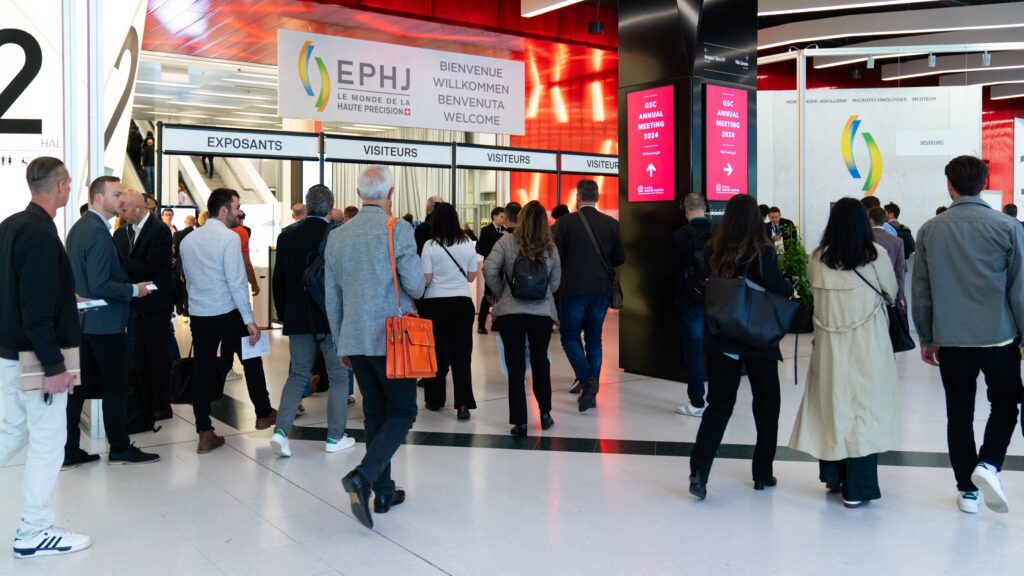
EPHJ 2026: the international high-precision trade show is sold out in a context of sustained innovation and diversification Publié le 12 mai 2026 One month before opening, EPHJ, the world’s leading event dedicated to high precision in the fields of watchmaking, jewellery, aeronautical and aerospace microtechnologies, and medtech, is already sold out for its 24th edition at Palexpo Geneva. The increase in registered visitors to date is also a very encouraging sign ahead of the show’s opening on June 16. With more than 750 confirmed exhibitors from 18 countries, 77% of them Swiss, and over 20,000 professional visitors expected, EPHJ is more than ever confirming its strategic role as a global showcase for innovation, industrial expertise and new technological convergences across its sectors. At a time when high-precision industries must combine innovation, industrial agility and market diversification, EPHJ 2026 stands out as a reflection of the transformations currently under way. One month before opening, the show had already recorded a 5% increase in registered visitors, a sign of stronger interest in an ecosystem capable of meeting both the expectations of traditional watchmaking and the needs of fast-growing sectors such as medtech, aeronautics and space. True to its DNA, EPHJ remains the trade show where subcontractors, technology providers, process specialists and high-precision industrial companies take centre stage. While watchmaking and jewellery remain the historic pillars of the event, the 2026 edition once again illustrates the rise of cross-disciplinary expertise and related high value-added markets. Industry 4.0, new materials and surface treatments at the heart of current developments The skills highlighted this year reflect a profound evolution of the sector. Industry 4.0 continues to transform production methods through machine connectivity, automation, industrial vision, traceability and data analysis. At the same time, exhibitors are presenting significant advances in surface treatments, new materials and advanced manufacturing processes, all of which have become essential levers to improve performance, sustainability, miniaturisation and the aesthetics of components. The many innovation entries submitted for the Grand Prix des Exposants reflect this vitality at a time when declining watch volumes are forcing the industry to come up with new ideas to win over customers. This momentum is also clearly benefiting watchmaking, which continues to attract new brands from abroad, drawn by the unique concentration of expertise found in Switzerland and by the ability of the EPHJ ecosystem to meet complex specifications. It is also helping to diversify both visitors and exhibitors, thanks to targeted communication efforts aimed at new companies active in medtech, space and aeronautics — three fields that are especially receptive to the high-precision capabilities showcased in Geneva. Roundtables to provide substance to the sector’s transformations Beyond the exhibition itself, EPHJ 2026 will offer several roundtables devoted to the major transformations reshaping high precision. The traditional discussion on watch market trends and outlook will bring together several key players from the sector to discuss developments and challenges in international markets. The show will also address the potential of neurotechnologies, showing how micro-precision contributes to advances in brain medicine, as well as the possibilities of additive manufacturing, highlighted as part of the Innovation Forum. Other debates will focus on the role of precious metals, balancing quality, responsibility and traceability, on new opportunities linked to photonics, on Switzerland’s growing role in the space sector, and finally on the state of the job market in high-precision industries. A trade show more than ever dedicated to business opportunities In an international environment shaped by economic tensions, value chain reorganisation and growing innovation needs, EPHJ intends more than ever to play its role as a business platform, an observatory and a place for meaningful connections. Exhibitors will find a highly qualified audience made up of decision-makers, engineers, purchasing managers, entrepreneurs and project leaders looking for partners capable of making a difference. EPHJ 2026 is therefore shaping up to be a concentrated showcase of industrial excellence, applied innovation and concrete opportunities, serving the professions that shape the high precision of today and tomorrow.
News

CIPOSA unveils its new high-precision jetting technology

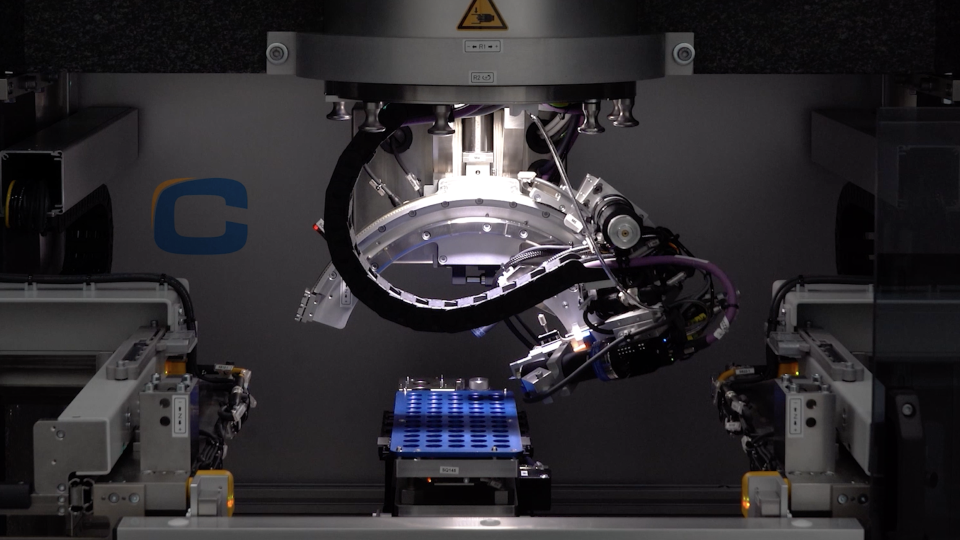
CIPOSA unveils its new high-precision jetting technology Published on 21 April 2026 At the EPHJ exhibition, CIPOSA will unveil its new high-precision dispensing / jetting technology, developed for the most demanding microtechnical applications. At the EPHJ exhibition, CIPOSA will unveil its new high-precision dispensing / jetting technology, developed for the most demanding microtechnical applications. Designed for the watchmaking industry and other precision industries, this solution enables controlled, fast and repeatable dispensing of various technical fluids, including: Lacquer Adhesives Varnish Resins and specialty fluids And much more At this scale, positioning is just as important as volume. Our technology combines micrometric precision, dispensing control and advanced automation to ensure consistent deposit quality, even on the most complex geometries. A solution designed for: High-precision non-contact dispensing Reduced material consumption Improved process repeatability Flexible integration into automated equipment Dispensing becomes faster, more precise and perfectly controlled. Meet our team at Booth A47 to discover this innovation live at the EPHJ exhibition.

News

LASEA brings its laser micromachining solutions to the defence sector

LASEA brings its laser micromachining solutions to the defence sector Published on 21 April 2026 LASEA Group has developed micromachining expertise for the medical, luxury goods and electronics industries. It is now applying that know-how in the aerospace and defence sectors. LASEA develops and manufactures very-high-precision laser micromachining solutions, mainly using ultrashort pulse technology, including nanometric and micrometric surface texturing solutions. This international group has a parent company based in Liège, Belgium, and also includes the firms Laser Cheval and Optec. It is leveraging the expertise it acquired in the medical, luxury goods and electronics sectors to unlock new markets, initially aerospace and, for the past year and a half, defence, with a shift in research budgets towards this industry. “In defence and aerospace, we mainly work in development, with a view to using our technologies and machines for new applications,” explains Pascal Durdu, commercial director at LASEA. We focus on surface functionalisation and thin layer removal. For example, we’re working on hydrophobicity and hydrophilicity, used for de-icing drones and repelling water droplets from camera lenses, as well as on stealth technology, radar and infrared.”  Adhesive-free hermetic joints LASEA is equally at home with polymers, ceramics, metals and PCBs. With electronics playing a key role in military applications, the Group is exploring developments in areas such as new Through Glass Via (TGV) technology, which uses a glass substrate whose superior electrical insulation properties prevent unwanted electrical interference. Another field of expertise is heat transfer. The increase in contact surface area made possible by LASEA’s technologies ensures better heat transfer in heat exchangers and therefore faster dissipation. This means, for example, that equipment will be detectable by an infrared camera for a shorter time. The size of some components, such as the micromotor, can also be reduced. “We also offer microwelding solutions for joining dissimilar materials such as metal/polymers or non-miscible materials such as glass/glass, enabling the creation of adhesive-free hermetic joints that can be used in defence applications,” adds Durdu. Given recent increases in defence funding, the sector’s manufacturers have every interest in turning to innovative SMEs in a field where technologies are evolving very rapidly. “We engage in extensive dialogue and educational work on laser technologies with defence companies that are unfamiliar with these technologies,” explains Durdu. “We conduct workshops before reviewing their applications and identifying areas where lasers can deliver added value.” It is also worth pointing out that lasers consume less energy than traditional machining, use no consumables, provide very high precision, can machine all materials and are athermic in their ultrashort version. What’s more, the flexibility they offer makes them particularly suited to the medium-sized volumes required by the defence industry. Patrice Desmedt Come and see Lasea at EPHJ, stand H88

News

Krystalix revolutionises single-crystal manufacturing

Krystalix revolutionises single-crystal manufacturing Published on 21 April 2026 The Grenoble-based start-up is one of only two companies in the world, and the only one in Europe, to have mastered cold crucible technology for growing single crystals. It will be used for watchmaking, security and semiconductors. Krystalix, a spin-off from Grenoble INP, was founded in May 2024 by a multidisciplinary team of engineers, doctors, researchers and professors. It has reached the proof-of-concept stage, and a process has been validated on ultra-pure silicon two inches in diameter. The commercial launch is planned for 2028 and the location for a future factory has already been chosen. Currently, single-crystal ingots (sapphire, ruby, silicon, YAG, etc.) are ‘manufactured’ using a hot crucible in which the material is heated to a very high temperature until it reaches melting point. A single seed crystal is then added, which will be captured by the liquid. This heating process has several disadvantages. It uses a lot of energy, and the crucible is expensive because it is made of iridium and also has a short service life. Finally, there is a risk that the crucible will release impurities and thus contaminate the future single crystal. The co-founders of Krystalix, CEO Kader Zaidat and Technical Director Christian Garnier, together with their team, developed the groundbreaking, magnetic cold crucible technology for producing single crystals. This process is much more complex than for metallic polycrystals (titanium, niobium, etc.), for which conventional cold crucibles are already used. “In the cold crucible, the liquid can be heated to 3,000 °C and, thanks to the magnetic system, movements in the liquid are controlled and the liquid doesn’t come into contact with the crucible walls, which don’t exceed 50 °C,” explains Rachid Chetouane, Managing Director of Krystalix. “The cold crucible is made of cooled copper and has an almost unlimited service life. What’s more, the process uses less energy and the crystal has a very high level of purity.” A huge potential market Krystalix currently uses its own hot crucibles to produce single crystals for luxury watch manufacturers, for process control purposes and also to generate turnover. Despite its status as a young, innovative deep-tech company, an i-Lab 2023 award followed by prizes for best start-up in the Innotrophées and Artinov competitions, which earned it funding from Bpifrance and two private banks, the business has only borrowed small sums. “We’ll keep our promises,” says Chetouane nevertheless. The potential market is huge – around €60 billion in 2030, including €6 billion for the high-end market targeted by Krystalix, which forecasts turnover of €6 million by that date, or even more if a major investor comes forward. Krystalix is initially catering for the watchmaking, semiconductor and security industries. In the security sector, being a French player is an advantage. In watchmaking, Krystalix already supplies single crystals in various colours for case middles, crystals and some pivots. Security applications will involve optics for lasers used for guidance and lidars, where purity is essential. Patrice Desmedt Meet Krystalix at EPHJ booth L120  

News

Precision, performance, durability: Horatec Group on the up in aerospace and defence

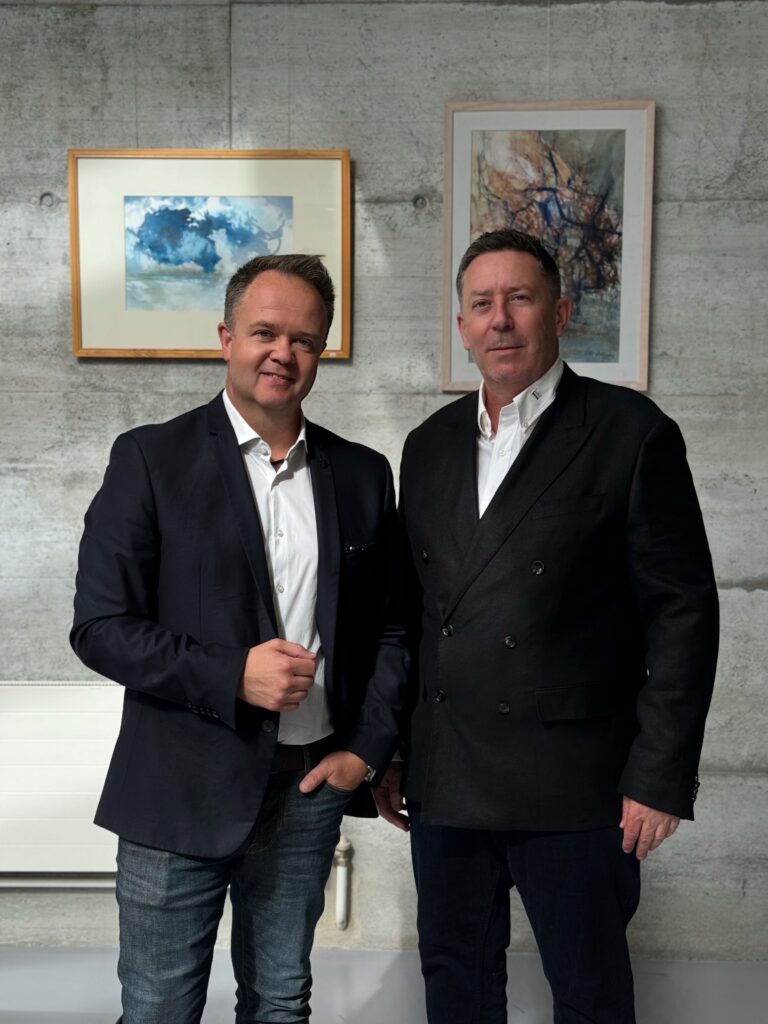
Precision, performance, durability: Horatec Group on the up in aerospace and defence Published on 21 April 2026 Established in September 2025, Horatec Group brings together three Swiss companies with complementary industrial expertise in surface treatment, complex metal machining and high-precision micromechanics. Two of them, Steiger Galvanotechnique SA and Titanium Engineering SA, deploy cutting-edge expertise for the aerospace and defence sectors, where technical requirements and reliability are paramount. Stephan Müller (CFO) and Olivier Piotrowski (CEO) Demanding surface treatments for the aerospace industry Steiger Galvanotechnique, based in Châtel-Saint-Denis (canton of Fribourg), has for a number of years been developing advanced surface treatment processes for aluminium, nickel and special alloys, specifically adapted to the extreme demands of the aerospace industry. In the space sector, Steiger works in particular on on-board aluminium components, often for satellites, applying low-emissivity treatments. This type of finish helps to control thermal radiation in the vacuum of space, which is essential for the reliability of on-board electronic and optical components. The company also specialises in SurTec 650 treatments, an extremely delicate chemical process that optimises interlayer adhesion, enhances corrosion resistance and ensures excellent compatibility with technical paint. For applications exposed to UV radiation (e.g. in space), Steiger also offers pigmented anodising processes using inorganic metal oxides, which are more stable over time. As regards engineering alloys, Steiger processes complex parts made of nickel, silver and nickel/Teflon for the aviation industry, with a focus on reducing friction, preventing adhesion and enhancing durability. All treatments are carried out with a high level of traceability and reproducibility, which is vital for critical components. Titanium, a natural ally for on-board performance Titanium Engineering has a clear specialisation: the production of titanium parts and surface treatments on titanium, a strategic material for aerospace and defence applications. Based in Yverdon-les-Bains (canton of Vaud), the company transforms and processes titanium in all its forms, from precision machining to advanced electrochemical treatments (polishing, passivation, anodising). Titanium is renowned for its excellent weight-to-strength ratio, its resistance to extreme environments and its compatibility with the thermal and mechanical stresses faced by on-board materials. With its expertise in treating surfaces with very low roughness, Titanium Engineering caters to both structural component manufacturers and manufacturers of sensitive components subject to machining, biocompatibility or conductivity constraints. A shared ambition geared towards technical excellence Driven by a strong industrial vision and supported by the investment fund Fonds GEI, Horatec Group intends to bolster its presence in high-tech sectors. Its strategy is based on complementary expertise, proximity to Swiss and European clients, and flexible processing capabilities suited to both prototypes and small to medium-sized production runs. With Steiger and Titanium Engineering, Horatec is carving out a reputation for itself as a credible and committed partner for future-critical applications, with a customer base that includes some of the leading names in aerospace and defence. Meet Horatec during EPHJ on booth J89

News

Silver solution spraying – from watchmaking to defence

Silver solution spraying – from watchmaking to defence Published on 21 April 2026 Altair Metalizz creates watchmaking components using additive manufacturing as well as spray solutions for finishing. These solutions are also used for electromagnetic shielding of composite covers for the defence industry. Established in 1998, Altair Consulting was a pioneer in additive manufacturing. This meant it could offer watchmakers and jewellers innovative technology for design and tooling, helping them to bring new collections into production. Now headed by Émeric Lignier, the company has expanded its areas of expertise, thanks in particular to a partnership with Metalizz in 2018 and the subsequent acquisition of its brand and patents in 2024. These include three flagship products: Uscleaner, an ultrasound surface cleaning and decontamination solution, and two spraying processes for aesthetic purposes but also used for electromagnetic shielding (EMC) with a silver-based solution. Altair Consulting is responsible for sales and related services, while Eidos Coating, led by Metalizz’s founder Philippe Sapet, handles R&D on a partnership basis. “We thought the technology developed by Metalizz would be ideal for adding aesthetic finishes to watchmaking projects,” explains Lignier. “We’re increasingly focusing on electronics and medical technology. EMC shielding and biocompatible coatings can protect robots and other products used in operating theatres. We’ve moved from a purely aesthetic line of business to a functional and technical one.”  “Essentially what we’re creating is a Faraday cage” One field of application for electronics is defence. Altair Metalizz’s customers include an optronics company that manufactures control and camera boards for drones and helicopters, which need to be protected from external elements. The application of different layers to injection-moulded or printed plastic parts reduces interference from outside. “Essentially what we’re creating is a Faraday cage,” says Lignier. “The first layer is pure silver and the second is an organic varnish with metal components, which is sprayed onto a cover made using additive manufacturing. This is lighter than aluminium and may involve complex shapes.”  Altair Metalizz started working with defence and aerospace manufacturers four years ago, a move facilitated by the decade that Lignier spent working as an engineer in these sectors. The testing phase is fairly lengthy as this represents a big technological shift for some major clients. “We don’t do a lot of publicity; we prefer to take things slowly to make sure we don’t skip any steps in the validation process, which requires a lot of testing,” says Lignier. “We want to be quietly confident by the time the solution is rolled out.” The validation process takes between six and 18 months, and involves mechanical and electrical parameters including resistance to temperature, tearing and harsh environments. Altair Metalizz’s small size makes it highly responsive, providing manufacturers with flexibility and agility. On the commercial front, it offers various packages, from full implementation to selling the entire solution, including consulting, installation, training and after-sales service. Patrice Desmedt Altair : Booth Q67

News

Acrotec Precision High-Tech: high-reliability microtechnology for aerospace and defence

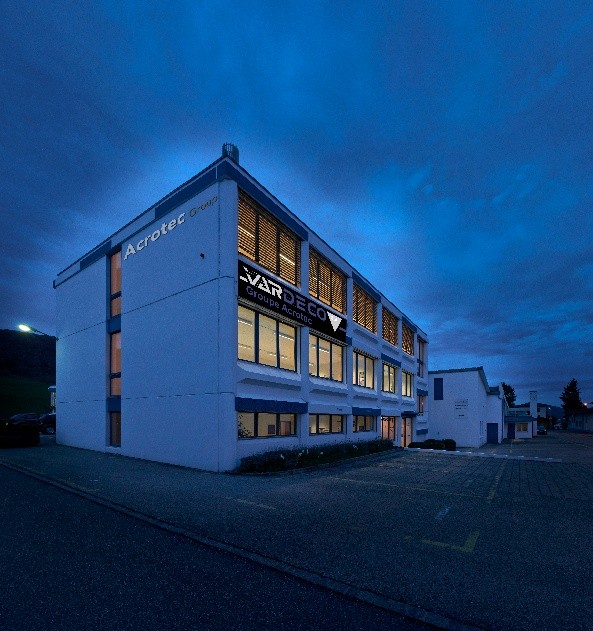
Acrotec Precision High-Tech: high-reliability microtechnology for aerospace and defence Published on 21 April 2026 At a time of accelerating investment in aerospace and defence, the Acrotec Group’s Precision High-Tech (PHT) division offers real technological added value that has already attracted many players in these highly specialised sectors. This is bolstering its position in industrial environments with extremely stringent technological requirements Rooted in the Group’s Swiss micromechanics heritage, the PHT division is now using its expertise to work on applications where reliability, repeatability and traceability are paramount. Having operated in these markets for over ten years, it specialises in components and sub-assemblies for timing systems, thermal batteries, guidance systems as well as highly technically demanding civil aviation applications. Its work draws on the combined expertise of several Group companies that between them span the entire industrial value chain: high-precision machining and bar turning, surface treatments, connectors, complex assembly and industrialisation of demanding technical series. The Group’s microtechnology DNA provides a competitive advantage here. Whereas the aerospace industry traditionally works on a macromechanical scale, Acrotec PHT offers cutting-edge expertise in hyper-miniaturisation, extreme tolerances, complex material machining and rapid prototyping – all of which have become essential for next-generation on-board systems. Vardeco – an acknowledged leader in high-reliability connectors Within the PHT division, Vardeco occupies a strategic position in precision metal connectors for high-performance applications. Used in harsh environments, its conductive components ensure signal transmission in conditions where failure is not an option. The company produces nearly 2 billion connectors each year, 92% of which are exported, and plays an active role in the supply chains of major international electronics and connectivity players operating in the aerospace and defence industries. Vardeco is also involved in developments related to new forms of air mobility, illustrating Acrotec PHT’s ability to support technological transitions in these sectors of the future driven by high-performance companies such as Roch (France), Takumi (Ireland), Dawnlough (Ireland) and Décovi (Switzerland). Industry standards aligned with sector requirements Several of the division’s entities in Switzerland and elsewhere in Europe are EN 9100 certified. This benchmark standard for aerospace and defence attests to their mastery of quality processes, traceability and the documentation requirements specific to these sectors. Based in Switzerland as well as France, Germany and Ireland, the division also offers clients secure production capabilities aligned with the current challenges of industrial relocation. Dynamic structural growth Although these markets still account for a modest share of the overall business, they are now one of the division’s most dynamic development areas. “Our background in micromechanics means we can provide highly reliable industrial solutions in environments where performance, safety and security can’t be compromised. The increased focus on aerospace and on security technologies is a natural development for us, fully in line with our high-precision DNA,” says Marjolaine Cordier, CEO of Acrotec Precision High-Tech. By leveraging its capabilities in industrialising complexity and the leadership of companies such as Vardeco in high-reliability connectivity, Acrotec Precision High-Tech is establishing itself as a leading industrial partner for the most demanding technological applications. Group Acrotec : stand H35

News

DeviceMed, the Leading Technical Magazine for the Medtech Industry

DeviceMed, the Leading Technical Magazine for the Medtech Industry Published on 23 March 2026 As the only French‑language magazine dedicated exclusively to medical technologies DeviceMed targets medical device manufacturers. It offers these companies comprehensive coverage of news from current and potential suppliers and subcontractors in the fields of design, manufacturing, measurement, quality control, cleaning, packaging and sterilization of medical devices. From materials and subcontracting services to software, production equipment and emerging technologies, DeviceMed is committed to keeping its readers informed about ongoing innovations and current industry challenges. The magazine also features a dedicated regulatory section and a focus on clinical matters. DeviceMed is published six times per year and distributed in 6,000 copies across France, Belgium, French‑speaking Switzerland and Luxembourg. The media platform also includes a website featuring nearly 3,000 articles organised by topic, a bi‑weekly e‑newsletter, and a LinkedIn page with more than 8,000 followers. A directory of suppliers serving medical device manufacturers can be found on the website www.devicemed.fr. Companies not yet listed in this directory are invited to register using the online form. The process is free of charge and takes only a few minutes. These supplier listings are also compiled in a printed guide published every July and distributed at all trade shows where the publisher exhibits throughout the year. DeviceMed is published by TIPISE SAS under license from Vogel Communications Group GmbH & Co. KG. There is also a German-language edition of DeviceMed, developed according to the same concept. The DeviceMed team is available for further information at (+33) 4 73 61 95 57 or at info@devicemed.fr . Come and visit us at stand M82 at EPHJ 2026.

News

Innovative surface treatments for implants and instruments

Innovative surface treatments for implants and instruments Published on 20 March 2026 Steiger Galvanotechnique SA, a Swiss company belonging to the Horatec Group, is a leader in metal surface treatment, offering innovative processes and services that are tailored to the needs of both the watchmaking and medtech industries. Steiger Galvanotechnique, which holds ISO 9001:2015, ISO 13485:2016 and EN 9100:2016 certifications, provides a full range of services, including not only surface treatment but also the subsequent steps of laser marking, final cleaning in biologically controlled water, packaging in an ISO 7 cleanroom, labelling and sterilisation. It applies surface treatments approved for the medical sector, including for titanium and stainless-steel implants. Titanium can be anodised using three different processes: colour anodisation (Biocoat); alkaline anodisation (Biodize); plasma electrolytic oxidation (Biocer). The Biocer process is used in particular for dental implants, for which Steiger Galvanotechnique also offers SLA functionalisation. The company has expertise in other surface treatments for titanium and stainless steel such as electropolishing (Biobright) and passivation. It can also produce an Ni–PTFE anti-galling coating for use on external stainless steel fasteners. In addition, Steiger Galvanotechnique can anodise aluminium instruments and device components, providing colour anodisation and hard anodisation as well as Ematal, which is particularly well suited to applications involving contact with blood. Spectracoat: a radiopaque coating for implants Based in Châtel-St-Denis in the Swiss canton of Fribourg, Steiger Galvanotechnique also provides transport services to simplify logistical and customs formalities for customers near the border with Switzerland. What sets the company apart is its ability to innovate in the development of new bio-active and bio-functionalised surface treatments for implants. For example, its Spectracoat coloured and wear-resistant coating, which can be applied to titanium, stainless steel and copper alloys as well as ceramics and plastics, is suitable for contact with the skin and is bio-compatible, implantable and radiopaque. Femto laser marking The company recently invested in femto laser technology, enabling it to produce black markings that are completely resistant to passivation and sterilisation, thus resolving the corrosion problems commonly associated with nanosecond lasers. Another benefit of the femto laser is its high execution speed, which significantly reduces cycle time. The femto laser can also be used for producing ‘sandblasted’ textures and satin finishes, for micromachining, for making black markings on aluminium and for marking inside rings or bands. Last but not least, Steiger Galvanotechnique is an expert in UV LIGA microelectroforming, enabling the production of miniature components or the creation of surface microstructuring. You can find Steiger Galvanotechnique SA at stand J89 at EPHJ 2026. https://steiger-galvanotechnique.ch/ (in French)

News

Your one-stop shop for grinding and polishing

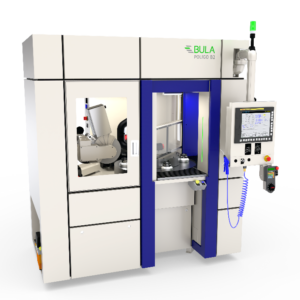
Your one-stop shop for grinding and polishing Published on 20 March 2026 Recomatic, a Swiss group which already has a very strong market presence in the watchmaking, luxury goods and aerospace segments as well as other high-tech industries, is pursuing a strategic diversification into the medtech sector. Here the group is successfully drawing on its expertise in grinding and polishing equipment – backed up by its proven track record with manufacturers of orthopaedic implants and other devices. Based near Porrentruy in the Swiss Jura, a hub for the production of watch cases and bands, Recomatic was taken over 22 years ago by its co-founder’s sons Christophe and Philippe Rérat. Since then, the company has grown, with the purchase of Bula in 2008, the establishment of SWIS in 2020 and the acquisition of Cosmap in 2023. In line with its core business of finishing the most complex surfaces, the group develops and manufactures grinding and polishing machines (manual, computer numerical control (CNC) or automatic loading). BULA B2 is a CNC unit for polishing, deburring and brushing.   Although watchmaking remains the mainstay of its customer base, Recomatic is seeing increasing interest from manufacturers of orthopaedic implants (for hips, knees and shoulders) and instruments, whose surface-finish requirements are similar to those of watchmakers. At approximately 0.005mm, the precision of RECO grinding equipment approaches the micron level, while the average roughness (Ra) obtained by polishing with BULA equipment can be as low as 0.03. “We’re able to work with ceramics, titanium and chrome–cobalt, or CrCo, with the same precision as precious metals,” Christophe Rérat points out. “We also process exotic materials such as sapphire, and special materials for aerospace, as well as carbon and rubber, to name just a few.” One-stop supplier for grinding and polishing Recomatic is one of the few manufacturers to offer both grinding and polishing solutions, enabling the optimisation of these two complementary activities. It also stands out for the wide variety of its models. “We have no fewer than 20 machines in our catalogue, with a variable number of axes depending on the application in question,” explains Rérat. These units are renowned for their versatility, not only in grinding, where the manufacturer adjusts the abrasive based on the material they are going to work on, but also in polishing, where they choose the brushes, cotton or polishing paste to achieve the roughness that the customer wants. “Our product ranges meet a number of different needs in the medical sector,” adds Rérat. “For example, RECO models are recommended for grinding hip cups and femoral heads, while BULA machines are more suitable for polishing knee prostheses. The SWIS range is mainly intended for applications requiring polishing that doesn’t cause any deformation, or for parts with hard-to-reach areas, such as certain dental components.” RECO units are fitted with a magazine that can hold up to 20 tools, such as milling cutters which allow, for example, fast removal of excess thickness and reduction of cycle times. “Some of our machines have very powerful spindles that can run at speeds of up to 30,000rpm-1,” says Rérat. With a view to meeting customers’ quality requirements, Recomatic units include probes for checking the dimensions of parts. In its showroom, Recomatic also has a device for measuring roughness based on light refraction; this is used to check the quality of in-house testing. Everything under one roof Another thing that sets Recomatic apart is the fact that its headquarters in Courtedoux brings everything together under one roof. The group gives its customers year-round access to a showroom where they can use about a dozen machines to run tests and make any necessary adjustments. “For example, if a company needs a specific fixture, we can respond to their request very quickly,” explains Sébastien Wuillaume, Customer Service Director. Support is one of the group’s core values. This includes training so that users can operate their machines for themselves, as well as refresher training to inform customers about new features and help them optimise equipment programming. To this end, Wuillaume’s team trains with consumables suppliers so that customers can benefit from the latest innovations. Recomatic can also handle product validation and pre-production runs, enabling customers to assess the repeatability of its machines and the consistent quality of its work. Piloting a grinder with an environmentally friendly design Sustainable development is one of the group’s key concerns, as evidenced by the installation of solar panels on its buildings, its use of wood-pellet heating and, on the production side, its ongoing efforts to design less energy-intensive and more compact machines. At EPHJ 2023, Recomatic presented its first environmentally friendly grinder: the RECO CT5, a 5-axis simultaneous CNC finishing centre designed for finishing and preparing complex surfaces, including grinding, drilling, milling and decorating. Recomatic manufactures close to 60% of its machine components in-house at its 9,500m² workshop in Courtedoux. Recomatic also distributes SWIS DLyte electrolytic polishing equipment as well as the Murua units manufactured by the Spanish company GPA INNOVA. You can find Recomatic at stand A67 at EPHJ 2026. https://grouperecomatic.com