News

Brodbeck Guillochage moves to Fleurier

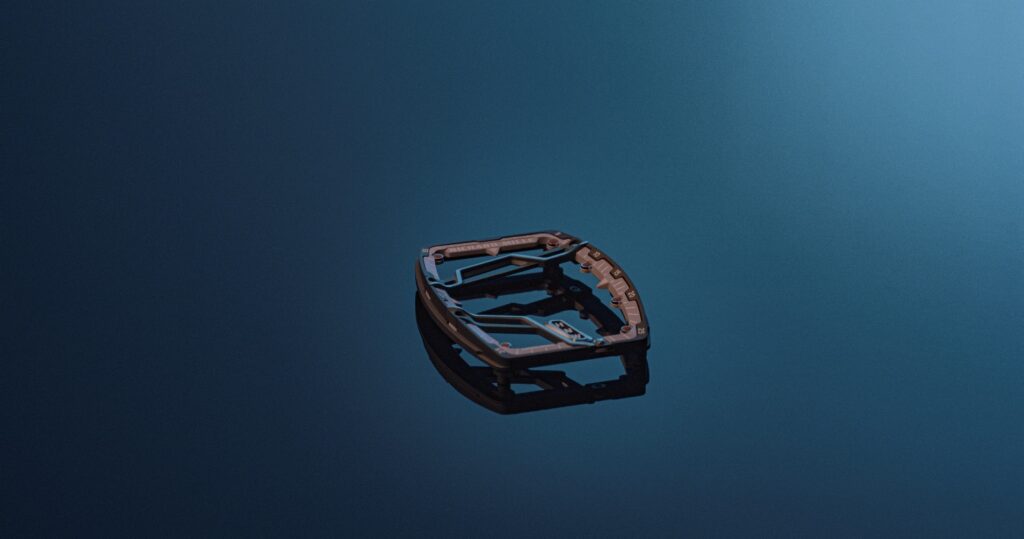
Brodbeck Guillochage moves to Fleurier Published on the octobre 30, 2024 Prix Gaïa (Gaïa Prize) winner and renowned master guillocheur Georges Brodbeck has set up his know-how and heritage machinery in the former watchmaking school in Fleurier, founded in 1896. Independent watchmaker Kari Voutilainen will be taking Brodbeck’s name and reputation forward as his expertise and values are passed on to the next generation. When the time came for him to retire, Georges Brodbeck could have given into any number of tempting offers. Its mythical machines and “manufacturing secrets” have returned to the Val de Travers and this former watchmaking school, which couldn’t have dreamed of a better rehabilitation. The building speaks volumes, having in its own way shaped the human landscape of Swiss watchmaking. Centre of excellence in the Val de Travers This venerable piece of architecture is now home to Brodbeck Guillochage, following the official inauguration on 26 September 2024. New managing director Angélique Singele and distinguished watchmaker Kari Voutilainen – the man hand-picked by Brodbeck to take the business forward – cut the ribbon at a ceremony attended by Cantonal Councillor Frédéric Mairy and representatives of the municipal authorities, among other guests. A smooth handover “Like a metal alchemist, the ‘guillocheur’ breathes life into an infinite array of refined, elegant and timeless decorations that shimmer beautifully in the light.” The move has seen Brodbeck, the most renowned master guillocheur (engine-turner) in the world of high-end watchmaking, leave his former base in Saignelégier. Having recently won the Creation – Craftsmanship category of the Prix Gaïa (dubbed the ‘Nobel Prize in Watchmaking’), awarded by the Musée International d’Horlogerie (International Watchmaking Museum) in La Chaux-de-Fonds since 1992, Brodbeck is handing over the baton in style. After all, in the business world – and SMEs are no exception here – the issue of succession when someone retires often gives rise to much concern about the loss of knowledge and expertise that are hard to pass on. This applies particularly to skills based on human dexterity and experience, as well as the captivating know-how that tempts some groups to aim for exclusivity, whetting their envy for vertical integration. Hand guillochage radiating timeless finesse and elegance “This age-old know-how dating back to the 15th century fascinates and inspires the artisans of tomorrow. Elevated to an ‘artistic trade’, it permeates every era.” Guillochage (engine-turning) is a demanding art that requires particular sensitivity, dexterity, high levels of concentration and precision as well as an innate sense of aesthetics. To bring each idea to life, guillocheurs use traditional machinery from another age: straight-line machines for linear decorations and broken lines, rose engine lathes for circular and concentric patterns, and very rare ‘tapestry’ machines. Guillocheurs work with top-quality materials such as gold, platinum, silver and mother-of-pearl. One of the crucial initial steps involves meticulously adjusting the machine to set up the pattern. Finally, with skill, consistency and patience, they guide the graver, controlling the pressure and speed to create intricate symmetrical patterns, making use of varying shapes, spacing and intertwining. Joël A. Grandjean Discover Brodbeck Guillochage Share this article Facebook Twitter Youtube News 25 avril 2025 Emissa dévoile le Precimill, un centre d'usinage compact et performant 25 mars 2025 Medtech – a rapidly expanding part of the EPHJ Show 20 mars 2025 CMT RICKENBACH – Photochemisches Ätzen: ein subtiles Verfahren für flache Bauteile 20 mars 2025 WatchDec – die Hochpräzision im Dienst der Medizintechnik Show all the news

News

A smooth transition at MPS Micro Precision Systems

A smooth transition at MPS Micro Precision Systems Published on the octobre 30, 2024 Retiring at the end of 2024? This is a concept many thought would be alien to CEO Nicola Thibaudeau, who has been a constant force and presence in the sector for over 20 years. We also spoke to Gilles Robert, who is preparing to succeed Nicola as CEO. We talked about their memories, plans for the future and how they’re keeping busy at this key point in the company’s life.  Nicola Thibaudeau (NT), how many employees did MPS have when you took over? And how many does it have today? When I joined MPS in 2003, there were 95 employees in Bienne and 35 in Bonfol, so 130 in total. There are now 560 of us spread between sites in Bienne, Bonfol, Court, Glovelier, La Chaux-de-Fonds and Boston. Gilles Robert (GR), will this growth continue? MPS is a company focused on innovation and growth, which are primarily generated by our employees. So it’s clear that I want to continue on this trajectory. Before entering the world of MPS, what did you know about the company and its history? NT: I had a friend who worked there who was passionate about ball bearings! As owner of Mécanex in Nyon, I bought micromotors from MPS, or rather RMB as it was known at the time. When I joined MPS on 1 December 2003, I knew that the company had undergone major restructuring, that the expertise was still there despite several hundred employees being made redundant in the preceding years. Then I learnt about RMB’s incredible history, from its invention of the watch bearing to the development of bearings for the Apollo mission that sent the first man to the moon, as well as bearings for pushchairs and roller skates – truly amazing! GR: I was of course familiar with MPS before I arrived, mainly through the projects of our Microsystems division, which is involved in things like artificial hearts, implantable pumps and fibre positioners for telescopes. Then I discovered the company’s extraordinary historical expertise in bearings for watches, with a strong focus on materials, which I liked! I’ve always been impressed by the range and inventiveness of the projects, and after two months with the company, it’s even better than I thought! Ms Thibaudeau, would you say that coming from a field other than watchmaking into a company with a strong and distinctive core business was an asset for growing a business, or was it a disadvantage? NT: My experience was varied but always in microtechnology, since I had worked on high-performance printed circuit boards for nearly a decade, at IBM in Canada and at Cicorel, then spent nine years in the space sector at Mécanex. In my two previous roles, at Mécanex and Cicorel, I worked on major watchmaking projects. Wide-ranging professional experience in multiple fields allows for synergies and positive contributions. As for you, Mr Robert, is coming from a familiar environment where everyone knows everyone else an asset or a disadvantage? Are you a few steps ahead, or do you run the risk of not daring to think outside the box? GR: Having points of reference before you join a company is certainly an advantage, given the complexity of the products involved. These references are much more likely in a very specific business model adopted by a number of companies in our field: the production of complex and demanding components and systems for a wide range of markets and applications, using and developing the exceptional skills we possess. I’m sure that this position of openness to a variety of markets and technologies means that we can ultimately serve each of our customers to the best of our ability, because they benefit from the very best experience and know-how. Are your previous roles at Ceramaret, Metallor and Sulzer an asset? GR: One of MPS’ major strengths is all its staff and expertise. For me, it’s a question of perpetuating this culture and nurturing it further so as to remain at the cutting edge of technology. When an organisation can essentially rise to virtually all the challenges posed by micromechanical applications, choosing the right projects to roll out and the right markets to develop is also a challenge in itself. In my career, I’ve been lucky enough to work in a wide range of fields and technologies, always in top international firms. Over time, I think I’ve also come to understand a little of what makes the ‘Swiss genius’ that allows so many of our companies to serve elite customers around the world. Beyond that, I’m looking forward to uncovering new aspects of these matters at MPS and continuing to evolve. What major advances have you made in materials? NT: The lubrication-free bearing patented in 2004 that uses ceramic balls and now the Super-Myrox, a totally non-magnetic, corrosion-resistant, high-performance bearing.   In your previous roles, materials were of paramount importance. What research is currently underway at MPS? GR: New materials are currently one of the pillars of any advanced system. MPS stands out not only for its performance when it comes to design, but also for its ability to effectively mass-produce the systems it develops. As such, mastering the manufacture of advanced materials is vital, and we have a number of developments underway involving rather ‘exotic’ materials as well as innovative processes that we are keeping as a surprise for our customers. I’m looking forward to contributing some of my experience. Are there, or have there been, any limits to your controlled expansion, like the job market or additional energy costs, for instance? NT: There’s no limit! GR: Highly specialised skills, both in terms of the workforce and the organisation, are necessary for success in our markets. As these skills take time to develop and master, this is probably the real limit to any long-term growth. So you need to work with people who already have specialist skills but who will also be able to interact effectively with

News

Générale Ressorts installs new heat treatment furnaces

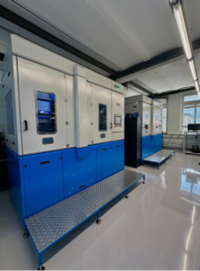
Générale Ressorts installs new heat treatment furnaces Published on the octobre 30, 2024 For 150 years, Générale Ressorts has been a leader in barrel spring manufacturing in Switzerland and beyond. Based in the Swiss city of Biel/Bienne, this Acrotec Group company has just announced the completion of the full refurbishment of its heat treatment facility, along with the installation of two new state-of-the-art furnaces. Heat treatment is a crucial phase in the manufacturing of barrel springs (mainsprings), with extra-high precision being needed to ensure the quality and performance of the end products. With its new equipment, Générale Ressorts can now further improve the quality of its springs while boosting productivity. The new furnaces are fitted with the latest automation technologies, which not only optimise the production process but also have benefits in terms of operator safety and ergonomics. These advances enable Générale Ressorts to manufacture high-precision products while improving its ability to meet the growing demands of its customers. Share this article Facebook Twitter Youtube News 25 avril 2025 Emissa dévoile le Precimill, un centre d'usinage compact et performant 25 mars 2025 Medtech – a rapidly expanding part of the EPHJ Show 20 mars 2025 CMT RICKENBACH – Photochemisches Ätzen: ein subtiles Verfahren für flache Bauteile 20 mars 2025 WatchDec – die Hochpräzision im Dienst der Medizintechnik Show all the news

News

The AI and DM Act: a global approach based on risk management

The AI and DM Act: a global approach based on risk management Published on the octobre 30, 2024 The latest edition of EPHJ featured a round table dedicated to the impact of AI on health and medical devices. This round table was organised by the EPHJ teams in partnership with Inartis. For this special report, DeviceMed magazine sought the opinion of a legal expert in artificial intelligence in healthcare. Here, Mr Luysterborg (Deloitte) describes the implications of the new European AI law for medical devices and the main and the main difficulties it raises for manufacturers. Preview the article Share this article Facebook Twitter Youtube News 25 avril 2025 Emissa dévoile le Precimill, un centre d'usinage compact et performant 25 mars 2025 Medtech – a rapidly expanding part of the EPHJ Show 20 mars 2025 CMT RICKENBACH – Photochemisches Ätzen: ein subtiles Verfahren für flache Bauteile 20 mars 2025 WatchDec – die Hochpräzision im Dienst der Medizintechnik Show all the news

News

In nanomachining, less is more

In nanomachining, less is more Published on the octobre 30, 2024 Showcasing precision watchmaking, the EPHJ trade fair welcomes a panoply of supremely talented subcontractors. Among them is Vuichard SAS, a firm from the Haute-Savoie region close to the Franco-Swiss border. It will be an exhibitor at EPHJ once again in 2025, drawing on expertise gleaned from almost 60 years’ experience in extra-high-precision machining to present some real feats of nanomachining. Visitors will be able to examine samples under a high-power magnifying glass, all produced using one-of-a-kind techniques. The company’s beginnings lie in die-sinking electro-discharge machining (EDM) and wire cutting, as illustrated by its fleet of 10 or so micro-erosion machines, using wire with a minimum diameter of 0.03 mm. Holes can be micro-drilled to diameters as small as 0.025 mm in the die-sinking discharge machining workshop. In 5-axis micro-milling, its Matsuura machining centre – with a 60,000-rpm spindle, 0.1-μm travel and cutters that are at least 0.04 mm in diameter – produces work of unrivalled finesse in steel with a hardness of up to 65 HRC. Micromachining makes up another element of this expertise. The relevant technologies have contributed to the creation of an outstanding watch, bringing together micro-erosion machines and machining of silicon crystal. As specialists in the seemingly impossible, ceramic parts manufacturer HARDEX and French subcontractor Vuichard rose to the challenges set by the designer. The products of other challenges recently taken on by Vuichard SAS will be on display at its stand in 2025. Like the company itself, here we have a modestly-sized space which will be showcasing some big innovations on a very small scale! Thanks to the precision of the Matsuura LX-O 5-axis machining centre, precision electrode production allows for die-sinking operations of a quality that would otherwise be impossible to achieve. Michel Pech Share this article Facebook Twitter Youtube News 25 avril 2025 Emissa dévoile le Precimill, un centre d'usinage compact et performant 25 mars 2025 Medtech – a rapidly expanding part of the EPHJ Show 20 mars 2025 CMT RICKENBACH – Photochemisches Ätzen: ein subtiles Verfahren für flache Bauteile 20 mars 2025 WatchDec – die Hochpräzision im Dienst der Medizintechnik Show all the news Share this article Facebook Twitter Youtube

News

Blue Phosphor, the AI magic wand

Blue Phosphor, the AI magic wand Publié le mai 30, 2024 Quality is a must when it comes to watches and jewellery. At the upcoming EPHJ show, AnotherBrain will showcase how it is using artificial intelligence (AI) to inspect the appearance of items. Share this article Facebook Twitter Youtube Uncompromising quality AnotherBrain – a startup that is home to 40 AI researchers – designed a software platform it calls Blue Phosphor® to enhance and verify the visual quality of manufactured products. At EPHJ 2024, its team will present the two key pillars driving this solution, Vision and Pilot, which support consistent quality by delivering robust and objective inspection capability. Vision draws on its connection to systems that optically assess parts to capture data, which is then compared with the idealised model to check its compliance. AI is contributing to the emergence of a new generation of quality specialists who are relieved of the burden of performing arduous and repetitive tasks. An intuitive heat map allows this application to locate functional, aesthetic or structural defects with pinpoint accuracy. Meanwhile, Pilot configures and organises this data, enabling the user to set the desired tolerance thresholds. Based on Organic AI, a solution inspired by nature, the system’s learning capabilities mean that users can continuously improve the qualitative performance of the production team. This quality control can be carried out on an ongoing basis for internal manufacturing or by subcontractors. Visitors to EPHJ may also be interested in the company’s annual user licence lease programme. Above a threshold of around CHF 15,000, human know-how can be supplemented with AI automation to improve quality at manufacturing companies. (Photo: AnotherBrain) Discover Blue Phosphor® News 25 avril 2025 Emissa dévoile le Precimill, un centre d'usinage compact et performant 25 mars 2025 Medtech – a rapidly expanding part of the EPHJ Show 20 mars 2025 CMT RICKENBACH – Photochemisches Ätzen: ein subtiles Verfahren für flache Bauteile 20 mars 2025 WatchDec – die Hochpräzision im Dienst der Medizintechnik Show all the news