Author name: stephan

News

DeviceMed, the Leading Technical Magazine for the Medtech Industry

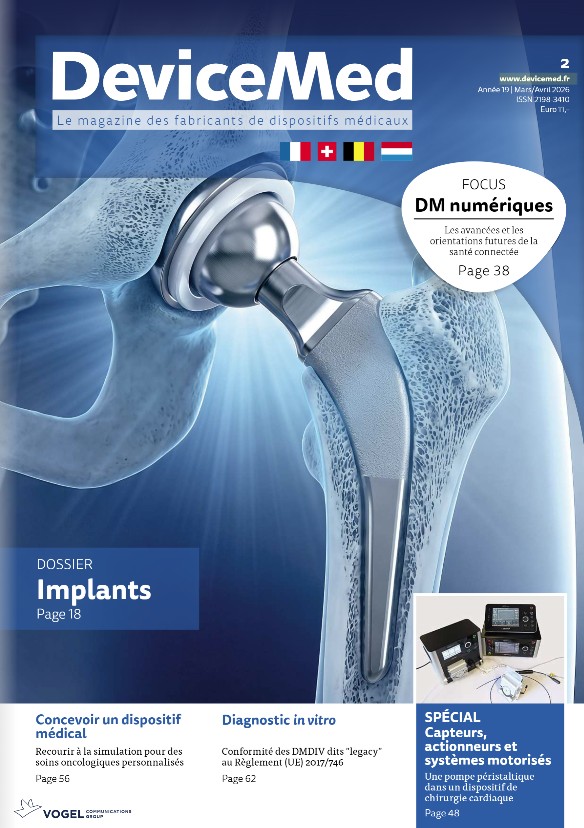
DeviceMed, the Leading Technical Magazine for the Medtech Industry Published on 23 March 2026 As the only French‑language magazine dedicated exclusively to medical technologies DeviceMed targets medical device manufacturers. It offers these companies comprehensive coverage of news from current and potential suppliers and subcontractors in the fields of design, manufacturing, measurement, quality control, cleaning, packaging and sterilization of medical devices. From materials and subcontracting services to software, production equipment and emerging technologies, DeviceMed is committed to keeping its readers informed about ongoing innovations and current industry challenges. The magazine also features a dedicated regulatory section and a focus on clinical matters. DeviceMed is published six times per year and distributed in 6,000 copies across France, Belgium, French‑speaking Switzerland and Luxembourg. The media platform also includes a website featuring nearly 3,000 articles organised by topic, a bi‑weekly e‑newsletter, and a LinkedIn page with more than 8,000 followers. A directory of suppliers serving medical device manufacturers can be found on the website www.devicemed.fr. Companies not yet listed in this directory are invited to register using the online form. The process is free of charge and takes only a few minutes. These supplier listings are also compiled in a printed guide published every July and distributed at all trade shows where the publisher exhibits throughout the year. DeviceMed is published by TIPISE SAS under license from Vogel Communications Group GmbH & Co. KG. There is also a German-language edition of DeviceMed, developed according to the same concept. The DeviceMed team is available for further information at (+33) 4 73 61 95 57 or at info@devicemed.fr . Come and visit us at stand M82 at EPHJ 2026.

News

Innovative surface treatments for implants and instruments

Innovative surface treatments for implants and instruments Published on 20 March 2026 Steiger Galvanotechnique SA, a Swiss company belonging to the Horatec Group, is a leader in metal surface treatment, offering innovative processes and services that are tailored to the needs of both the watchmaking and medtech industries. Steiger Galvanotechnique, which holds ISO 9001:2015, ISO 13485:2016 and EN 9100:2016 certifications, provides a full range of services, including not only surface treatment but also the subsequent steps of laser marking, final cleaning in biologically controlled water, packaging in an ISO 7 cleanroom, labelling and sterilisation. It applies surface treatments approved for the medical sector, including for titanium and stainless-steel implants. Titanium can be anodised using three different processes: colour anodisation (Biocoat); alkaline anodisation (Biodize); plasma electrolytic oxidation (Biocer). The Biocer process is used in particular for dental implants, for which Steiger Galvanotechnique also offers SLA functionalisation. The company has expertise in other surface treatments for titanium and stainless steel such as electropolishing (Biobright) and passivation. It can also produce an Ni–PTFE anti-galling coating for use on external stainless steel fasteners. In addition, Steiger Galvanotechnique can anodise aluminium instruments and device components, providing colour anodisation and hard anodisation as well as Ematal, which is particularly well suited to applications involving contact with blood. Spectracoat: a radiopaque coating for implants Based in Châtel-St-Denis in the Swiss canton of Fribourg, Steiger Galvanotechnique also provides transport services to simplify logistical and customs formalities for customers near the border with Switzerland. What sets the company apart is its ability to innovate in the development of new bio-active and bio-functionalised surface treatments for implants. For example, its Spectracoat coloured and wear-resistant coating, which can be applied to titanium, stainless steel and copper alloys as well as ceramics and plastics, is suitable for contact with the skin and is bio-compatible, implantable and radiopaque. Femto laser marking The company recently invested in femto laser technology, enabling it to produce black markings that are completely resistant to passivation and sterilisation, thus resolving the corrosion problems commonly associated with nanosecond lasers. Another benefit of the femto laser is its high execution speed, which significantly reduces cycle time. The femto laser can also be used for producing ‘sandblasted’ textures and satin finishes, for micromachining, for making black markings on aluminium and for marking inside rings or bands. Last but not least, Steiger Galvanotechnique is an expert in UV LIGA microelectroforming, enabling the production of miniature components or the creation of surface microstructuring. You can find Steiger Galvanotechnique SA at stand J89 at EPHJ 2026. https://steiger-galvanotechnique.ch/ (in French)

News

Your one-stop shop for grinding and polishing

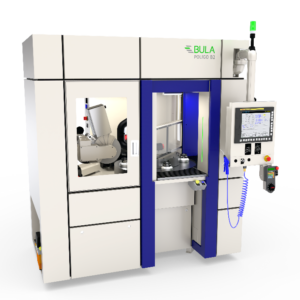
Your one-stop shop for grinding and polishing Published on 20 March 2026 Recomatic, a Swiss group which already has a very strong market presence in the watchmaking, luxury goods and aerospace segments as well as other high-tech industries, is pursuing a strategic diversification into the medtech sector. Here the group is successfully drawing on its expertise in grinding and polishing equipment – backed up by its proven track record with manufacturers of orthopaedic implants and other devices. Based near Porrentruy in the Swiss Jura, a hub for the production of watch cases and bands, Recomatic was taken over 22 years ago by its co-founder’s sons Christophe and Philippe Rérat. Since then, the company has grown, with the purchase of Bula in 2008, the establishment of SWIS in 2020 and the acquisition of Cosmap in 2023. In line with its core business of finishing the most complex surfaces, the group develops and manufactures grinding and polishing machines (manual, computer numerical control (CNC) or automatic loading). BULA B2 is a CNC unit for polishing, deburring and brushing.   Although watchmaking remains the mainstay of its customer base, Recomatic is seeing increasing interest from manufacturers of orthopaedic implants (for hips, knees and shoulders) and instruments, whose surface-finish requirements are similar to those of watchmakers. At approximately 0.005mm, the precision of RECO grinding equipment approaches the micron level, while the average roughness (Ra) obtained by polishing with BULA equipment can be as low as 0.03. “We’re able to work with ceramics, titanium and chrome–cobalt, or CrCo, with the same precision as precious metals,” Christophe Rérat points out. “We also process exotic materials such as sapphire, and special materials for aerospace, as well as carbon and rubber, to name just a few.” One-stop supplier for grinding and polishing Recomatic is one of the few manufacturers to offer both grinding and polishing solutions, enabling the optimisation of these two complementary activities. It also stands out for the wide variety of its models. “We have no fewer than 20 machines in our catalogue, with a variable number of axes depending on the application in question,” explains Rérat. These units are renowned for their versatility, not only in grinding, where the manufacturer adjusts the abrasive based on the material they are going to work on, but also in polishing, where they choose the brushes, cotton or polishing paste to achieve the roughness that the customer wants. “Our product ranges meet a number of different needs in the medical sector,” adds Rérat. “For example, RECO models are recommended for grinding hip cups and femoral heads, while BULA machines are more suitable for polishing knee prostheses. The SWIS range is mainly intended for applications requiring polishing that doesn’t cause any deformation, or for parts with hard-to-reach areas, such as certain dental components.” RECO units are fitted with a magazine that can hold up to 20 tools, such as milling cutters which allow, for example, fast removal of excess thickness and reduction of cycle times. “Some of our machines have very powerful spindles that can run at speeds of up to 30,000rpm-1,” says Rérat. With a view to meeting customers’ quality requirements, Recomatic units include probes for checking the dimensions of parts. In its showroom, Recomatic also has a device for measuring roughness based on light refraction; this is used to check the quality of in-house testing. Everything under one roof Another thing that sets Recomatic apart is the fact that its headquarters in Courtedoux brings everything together under one roof. The group gives its customers year-round access to a showroom where they can use about a dozen machines to run tests and make any necessary adjustments. “For example, if a company needs a specific fixture, we can respond to their request very quickly,” explains Sébastien Wuillaume, Customer Service Director. Support is one of the group’s core values. This includes training so that users can operate their machines for themselves, as well as refresher training to inform customers about new features and help them optimise equipment programming. To this end, Wuillaume’s team trains with consumables suppliers so that customers can benefit from the latest innovations. Recomatic can also handle product validation and pre-production runs, enabling customers to assess the repeatability of its machines and the consistent quality of its work. Piloting a grinder with an environmentally friendly design Sustainable development is one of the group’s key concerns, as evidenced by the installation of solar panels on its buildings, its use of wood-pellet heating and, on the production side, its ongoing efforts to design less energy-intensive and more compact machines. At EPHJ 2023, Recomatic presented its first environmentally friendly grinder: the RECO CT5, a 5-axis simultaneous CNC finishing centre designed for finishing and preparing complex surfaces, including grinding, drilling, milling and decorating. Recomatic manufactures close to 60% of its machine components in-house at its 9,500m² workshop in Courtedoux. Recomatic also distributes SWIS DLyte electrolytic polishing equipment as well as the Murua units manufactured by the Spanish company GPA INNOVA. You can find Recomatic at stand A67 at EPHJ 2026. https://grouperecomatic.com
News

Compact, silent and energy-efficient laminar flow units

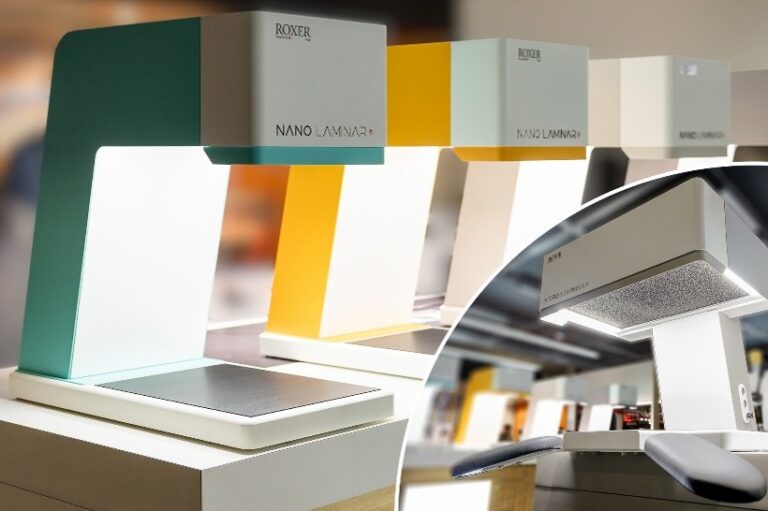
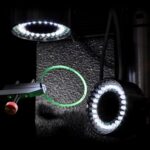
Compact, silent and energy-efficient laminar flow units Published on 20 March 2026 Roxer SA, which specialises in water resistance testing for watches, has developed a number of new laminar flow units that ensure a locally controlled atmosphere. This offers many benefits, including energy efficiency, that could also appeal to medical device manufacturers… With 70 years of expertise and ‘Swiss Made’ know-how, Roxer SA ensures total technical reliability across all its processes, from engineering through to after-sales service. Based in La Chaux-de-Fonds in Switzerland, the company combines an array of standard products with customised solutions meeting the highest industrial standards of precision and quality. Its latest technological innovations include two new laminar flow units: Nano Laminar and Micro Laminar. Demonstrating Roxer’s mastery of ISO 3 requirements, these models have been designed to redefine precision cleanliness, exactly where it is needed, with a unique solution featuring a sleek and ergonomic design. The aim is to ensure a controlled local atmosphere that eliminates dust and microparticles: a vital requirement not only for watchmaking but also for medtech and microtechnology. Three models to cover every need Nano Laminar and Micro Laminar boast a particularly sleek and stylish design (Source: Roxer SA) With work areas of 20x30cm and 50x30cm respectively, Nano Laminar and Micro Laminar are compact, lightweight, silent, user-friendly and energy-efficient equipment models, with energy consumption levels three times lower than a conventional laminar flow unit. They adapt seamlessly to every environment, meaning they can be used at all stages of production, including assembly and control. These models also stand out thanks to their ultra-efficient and adjustable LED lighting, which completely eliminates any shadows. Roxer highlights what it considers a real breakthrough in terms of aesthetics, in that these new laminar flows eliminate the need to enclose workstations, thus improving the user experience as well as the overall environment. A third model, Ultra Laminar, completes this technologically innovative range. It takes the conventional laminar flow unit to the next level, delivering a customised solution that ensures a clean work area while fitting seamlessly into any type of workbench. Optional accessories and customisations Ultra Laminar provides a tailor-made solution for workbenches (source: Roxer SA). The Nano Laminar and Micro Laminar models are offered as standard in a tabletop version or in a workbench version with a work surface. Customers can also choose: the colour scheme of the various surfaces, or a laminated wood finish; a height-adjustment option; armrests. The armrests provide extra comfort by supporting users’ forearms and allowing them to make more precise movements. You can find Roxer SA at stand B25 at EPHJ 2026. https://www.roxer.ch/en/

News

Leveraging watchmaking precision for medical tubes

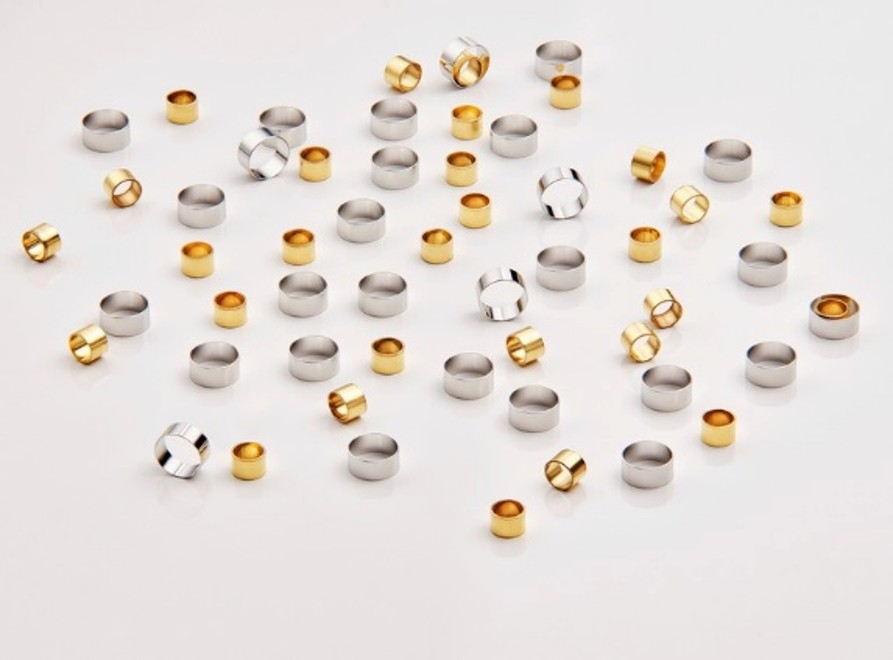
Leveraging watchmaking precision for medical tubes Published on 20 March 2026 PX Group is celebrating half a century of know-how in precision metallurgy this year. The company has successfully leveraged its expertise in tubular components for watchmaking to meet the stringent quality requirements of the medical sector, particularly implantology. As with many Swiss companies, PX Group’s historical watchmaking know-how has been the key technological driver behind its diversification. Until the late 1990s, consummate expertise in shaping ultra-high-precision tubular components was required to manufacture watch bands made up of hollow preformed and brazed links. This expertise has enabled the Group to master the process of forming thin tubes, manufacturing extremely thin walls and producing complex geometries, while also ensuring dimensional regularity and impeccable quality. This precision culture, inherited from the watchmaking industry, has naturally paved the way for new high-value-added applications in niche markets, such as the medical sector, with PX Group leveraging this know-how to pivot into the creation of tubes for endoscopy. In doing so, it is pushing the technical boundaries even further with the development of variable-section tubes, meeting the most demanding requirements. Marker bands and electrodes Drawing also on its internal expertise in casting and precious-metal processing, the Group has extended its expertise to marker bands and electrodes. These components – key to the proper functioning of medical devices for use inside the human body – enable specific functions such as positioning, measurement and signal transmission. Marker bands are used in catheters, stents and other implantable devices. Being radiopaque, they are visible under X-rays. This allows healthcare professionals to position and track them accurately during procedures. Like electrodes, marker bands also serve as electrical contacts to ensure reliable connectivity in devices such as pacemakers. The materials used are highly conductive and resistant to corrosion, resulting in long-lasting performance. These components also help ensure the precision of measuring devices, thus guaranteeing the reliability of the tools used to monitor vital signs and assess treatments. High-precision production using quality materials The materials used in the production of marker bands and electrodes are selected for their superior electrical, mechanical and bio-compatible properties. Some of the most commonly used alloys are: platinum and alloys: platinum, 10% platinum–iridium and 20% platinum–iridium; gold and alloys: gold, copper–silver gold and 3N18; palladium and alloys: palladium and palladium–silver. PX Group offers components made from platinum, gold and palladium (source: PX Group). The in-house refining process delivers high levels of durability, precision and bio-compatibility, making these products the perfect choice for sophisticated medical applications. PX Group produces fully traceable, customisable rings with a length ranging from 0.4 to 20 mm, an external diameter from 0.3 to 4 mm and a wall thickness of up to 25 microns (around one-third of the thickness of a hair). This level of precision required the continuous improvement of industrial processes, particularly in high-precision laser cutting. The company is also working on developing fine polishing solutions tailored to the extreme requirements of these applications. Investment in production facilities In 2025, PX Group acquired a third laser to meet growing demand: a femtosecond laser which will enable the Group to combine its expertise in laser machining and small-diameter wires to ensure optimal precision. This investment opens up new prospects in this market, with the new machine enabling the company to double its production of marker bands and medical electrodes. You can find PX Group at stand J55 at EPHJ 2026. https://pxgroup.com/en/home/medical/

ressort indu
News

High-precision springs for medical applications

High-precision springs for medical applications Published on 20 March 2026 As a designer and manufacturer of custom springs, RISA uses its expertise and experience to support the most demanding industrial sectors. These naturally include watchmaking and medtech, where precision and reliability are paramount. Based in Courgenay in the Swiss Jura, at the heart of an industrial fabric historically linked to mechanical precision, Ressorts Industriels SA , or RISA for short, has been designing and manufacturing springs since 1959. Its precision springs are used in the most demanding sectors – watchmaking, of course, but also medical technology, microtechnology, electrical engineering, aerospace and robotics. RISA’s technical expertise means that it can meet highly stringent specifications, while its unique know-how in the production of custom springs offers significant potential for growth. Each spring produced undergoes dynamic testing and vision inspection. Source : Ressorts Industriels SA[/caption] All types of springs The company has expertise in all major spring types: compression, extension and torsion springs, wire forms, flat and stamped springs, as well as various components for use in watch cases and movements. This versatility enables it to support its customers from the design phase through to industrial production, while offering solutions tailored to the specific constraints of each application. Although they often go unnoticed by the public, springs are found in countless everyday objects and technical devices. For all their apparent simplicity, these components play a vital functional role: their dynamic behaviour allows them to store and release energy, so contributing directly to the operation of the mechanisms in which they are used. In fields such as watchmaking and medtech, where precision and reliability are key, the design and manufacture of these parts demand a very high level of quality. From watchmaking to medtech Over the years, the company has developed its expertise to build real technological bridges between the watchmaking market – historically its core business – and the medical technology sector. Its ability to work with extremely fine wires and produce complex geometries has been a major asset in this process. This expertise naturally translates into the manufacture of components for orthodontic instruments, surgical tools and respirators. Meanwhile, these skills continue to serve the needs of the watchmaking industry, particularly for movement, case and clasp components. Quality closely monitored Dynamic test benches and unit vision inspection systems are used to check the conformity and repeatability of the parts produced – two essential criteria for devices where failure is not an option. The knowledge acquired in alloy selection, heat treatments and surface finishes also helps to ensure operational excellence in the approach to these manufacturing processes. While these synergies between watchmaking and medtech offer valuable growth opportunities, they also increase organisational requirements. For an SME like RISA, this development presents both a challenge and the opportunity to further raise its standards and consolidate its position as a trusted partner for high-value-added industrial applications. It should also be noted that the company has a structured management system certified by a number of internationally recognised standards: ISO 9001 for quality management, ISO 13485 for medical devices, ISO 14001 for the environment and ISO 45001 for employee health and safety. You can find RISA at stand H16 at EPHJ 2026. ressortsindustriels.ch

News

AZUREA: A CDMO specialising in complex micro-mechanical applications

AZUREA: A CDMO specialising in complex micro-mechanical applications Published on 20 March 2026 While the Azurea Group has forged a strong reputation in the watchmaking industry thanks to more than a century of expertise in this area, its subsidiary Azurea Microtechnique has shifted much of the focus of its activities to the medical sector since 2018. This ISO 13485-certified company positions itself as a one-stop shop supplying complete micro-mechanical sub-assemblies. Azurea Microtechnique est basée à Bévilard, dans le canton de Berne en Suisse. Azurea Microtechnique has inherited the Group’s historical expertise in miniaturisation and precision. “It makes sense for us to leverage our expertise in small products from watchmaking in order to pivot to the medtech industry, which is constantly seeking to reduce space,” explains Yohann Viennet, CEO of the Azurea Group. “This means we’re now having to comply with dimensional constraints that come close to those of watchmaking.” He highlights another commonality between the two sectors: “As even the slightest blemish is a no-no in both medtech and watchmaking, our machining must be controlled down to the micron level, although this isn’t necessarily required by the dimensional tolerances given in the technical specifications.” One-stop shop service Azurea Microtechnique’s operations go far beyond the Group’s historical machining activities, as the company has specialised in producing complex assemblies for micro-mechanical applications. For this purpose, it has acquired additional in-house resources and skills – passivation, laser marking and assembly in ISO 5 and ISO 7 cleanrooms (gluing, pressing, crimping, screwing, welding) – and also draws on other activities in which the Group has expertise, such as cutting, grinding and milling. “In every case, Azurea Microtechnique remains the customer’s single point of contact,” says Viennet. “We manage all the supplies and provide them with a finished and functional sub-assembly.” In other words, from design for manufacturing onwards, the customer can hand over to Azurea Microtechnique the end-to-end industrialisation of components or complete functions, while benefiting from its infrastructure and industrial equipment for series production, with quality being monitored through automated process control (APC). An approach based primarily on the function of the delivered unit What sets Azurea Microtechnique apart is that its approach isn’t limited to manufacturing a part, but focuses primarily on guaranteeing that the customer’s part will actually deliver the specified functionality. The company has particular expertise in four main functional areas: . seals; . clips; . transmission and delivery systems; and . cutting/slicing. For example, as far as seals are concerned, the company worked on a medical-grade stainless steel implantable valve connector for treating hydrocephalus. The main difficulty here was ensuring that the seal would be maintained under pressure. Another example of the company’s activities, combining its expertise with both seals and clips, was a facility for cleaning and disinfecting dental hand instruments. Azurea Microtechnique produced the entire micro-mechanical system for connecting and injecting the fluid. This project involved three difficulties: ensuring a sealed interface between the cleaning equipment and the hand-held device, with the latter clipping onto the equipment; making sure that the fluid passes through all the channels of the hand-held device without any leaks; choosing the appropriate material and design to prevent the corrosion to the equipment caused by the cleaning agent. In terms of transmission and drive systems, there is the micro-mechanical pumping and regulation system of various insulin pumps.   Finally, the company’s expertise in cutting/slicing can be seen in, for instance, an ophthalmic device for corneal ablation.   “We’re fortunate enough to be able to call on a team of expert engineers with advanced skills in industrialisation, methods, metrology and quality,” adds Viennet.       Comprehensive regulatory support   Beyond functional security, the customer can rely on Azurea Microtechnique for all the regulatory aspects relating to the qualification and industrialisation of their product. The company provides them with a full technical dossier including all the installation qualification (IQ)/operational qualification (OQ)/performance qualification (PQ) stages, the production part approval process (PPAP), the process capability index (Cpk) and the calibration and measurement capability (CMC). You can find Azurea Microtechnique at stand A66 at EPHJ 2026. https://azurea.ch/en/medtech/ Facebook Twitter Youtube Share this article

News

Quality and compliance training for medtech companies

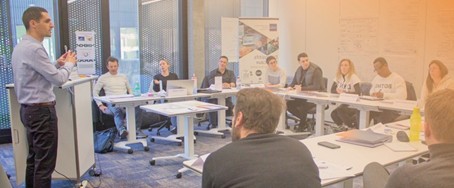
Quality and compliance training for medtech companies Published on 20 March 2026 Quality – a value integral to both watchmaking and medtech – is at the heart of Ariaq’s expertise. The company offers medical device manufacturers training courses geared towards quality management and, more broadly, regulatory compliance. Ariaq describes itself as a training and consulting centre for quality and performance. In the medtech sector, precision is not confined to manufacturing but extends to regulatory compliance, process traceability and quality system control. Every medical device placed on the market is subject to strict requirements, making quality both a strategic lever and a regulatory obligation. Against this backdrop, Ariaq helps companies and professionals in the medical device industry to enhance their skills and practices through specialised training and practical support. In line with this approach, Ariaq is also involved in the Swiss quality ecosystem, in particular through its support for the Swiss Association for Quality (SAQ), thereby contributing to the development and recognition of quality and performance skills. Structuring processes and ensuring regulatory compliance The development and marketing of medical devices requires a thorough understanding of regulatory standards and quality management systems. To enable companies to structure their processes and ensure regulatory compliance, Ariaq offers a range of training courses on the following topics: ISO 13485-compliant quality management systems The EU Medical Devices Regulation (MDR) and regulatory requirements for medical devices ISO 14971-compliant risk management Quality audits in the medtech environment Process validation and control Document management and regulatory traceability These training courses enable quality, regulatory affairs, production and R&D teams to better understand industry requirements and integrate best practices from the earliest stages of product development. A pragmatic, industry-focused approach Ariaq’s approach is based on a simple concept: transforming regulatory requirements into effective operational practices. The training courses offered are based on real-life industry cases to help professionals: structure their quality system in accordance with ISO 13485 incorporate MDR and US Food and Drug Administration (FDA) requirements into their processes ensure risk management and traceability effectively prepare for regulatory inspections and audits This approach enables medtech companies to boost compliance while enhancing the robustness of their industrial processes. You can find Ariaq at stand M88 at EPHJ 2026. www.ariaq.ch     Facebook Twitter Youtube Share this article

News

More compact, PX calibres transcend the Sphérillon

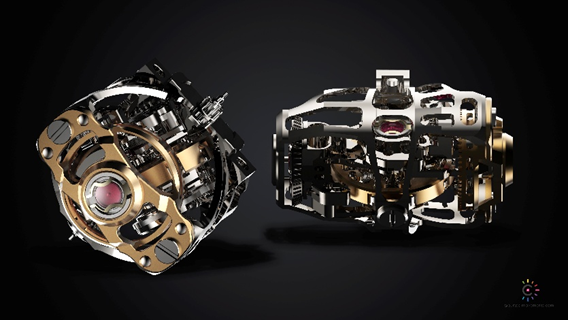
More compact, PX calibres transcend the Sphérillon Published on 15 December 2025 The horological UFOs known as Sphérillon—a contraction of “sphere” and “tourbillon”—are undergoing a revolution: now more compact, promising additional functions, and even capable of evolving into automatic calibres. The most avant-garde watch brands are set to experience new, improbable thrills. Under the name PX, the art of the tourbillon enters a new dimension. At EPHJ 2025 First unveiled in Geneva in 2022 at the high-precision trade show by Purtec, the company of “crazy movements” founded in 2021 in Vallorbe by Arnaud Faivre and integrated into the Tec-Group Swiss, this invention by master watchmaker and Gaïa Prize laureate Éric Coudray now opens up fresh applications. “Talented designer and master watchmaker Éric Coudray named his tourbillon ‘Sphérillon’ to simply define its main technical specificity,” noted journalist and watchmaker Vincent Daveau in a Swiss horology journal. He recalled that “in 1801, Abraham-Louis Breguet also christened his cage ‘tourbillon,’ as it performed a regular rotation to cancel out balance defects of the regulating organ inside—because once the watch was running, the component seemed to whirl.” A Concentration of Feats Inspiring Creativity Rarely has a mechanical calibre embodied such a blend of enchantment, kinetics, chronometric complexity, and precision. Now, under the PX designation, the celebrated Sphérillon has been reduced in size, making it more accessible for those returning to the design of timepieces with more “reasonable” dimensions—aligned with the global trend back to 40 mm diameters, or even smaller. This roadmap also brought an inevitable gain in reliability thanks to fewer components overall. Notably, the thickness remains at 9.46 mm—even in “full options” versions—and the 50-hour power reserve is still guaranteed. ‘A calibre housed in a case that stays true to the current trend of watches returning to around 40 mm in diameter, with a tonneau and square shape.’? Photographer and graphic artist Jérôme Saillard has demonstrated through case studies that countless combinations are possible. “The mainplate has been optimized to optionally integrate additional functions: two options for power reserve display (at 6 o’clock or 4 o’clock), the addition of a seconds hand aligned with the off-centered hour track while preserving clear legibility of the hour and minute hands, and not forgetting the automatic winding system,” explains Bastien Maillefer, Purtec’s head of watchmaking.  Prestigious brands lining up Under the PX designation, these evolutions of the Sphérillon are hyper-complex micromechanical constructions, already being tested for months on the wrists of Purtec’s watchmakers. There is little doubt that this vast territory of new technical and aesthetic possibilities will soon inspire the most prestigious houses of haute horlogerie to create pieces that go far beyond mere “talking pieces.” https://purtec-movements.com PX Purtec calibres 21,600 vph, technology and materials With reduced diameter and thickness, the PX calibres fit seamlessly into tonneau cases (32.8 mm from 3–9h and 34.3 mm from 12–6h), as well as square or round designs. The rotation speed of the titanium outer cage of the tourbillon remains at 30 seconds, ensuring extraordinary visual appeal. To achieve greater inertia despite the smaller size, the balance arms and weights are crafted in solid gold. Meanwhile, the outer terminal curves of the Breguet spirals at the heart of these calibres—beating at 3 Hertz, or 21,600 vibrations per hour—are shaped internally in the “Philips” style. Joël A. Grandjean / 1876 News Sienna Private Equity joins TEC Group On October 17, 2025, TEC Group, founded in 2008 by Arnaud Faivre, announced the entry of Sienna Private Equity (SPE), a European mid-market private equity fund, as an investor. The transaction coincides with the acquisition of AMC Technologies, a leader in precision tool manufacturing. The combined group will be led by Arnaud Faivre and Stéphane Vagne. TEC Group is a recognized supplier to Switzerland’s luxury watch industry, specializing in the production of essential components for mechanical movements and partnering with some of the most prestigious watchmaking houses. With SPE’s backing, TEC Group aims to accelerate its growth trajectory—both organically and through strategic acquisitions—while expanding the range of services offered to its clients. News 15 December 2025 More compact, PX calibres transcend the Sphérillon 15 December 2025 Innovation Digest EPHJ 2025 – The Future of High Precision, Down to the Micron! 15 December 2025 Best wishes ! 15 December 2025 Strategic acquisition in the world of custom packaging Show all news Facebook Twitter Youtube Share this article

News

Innovation Digest EPHJ 2025 – The Future of High Precision, Down to the Micron!

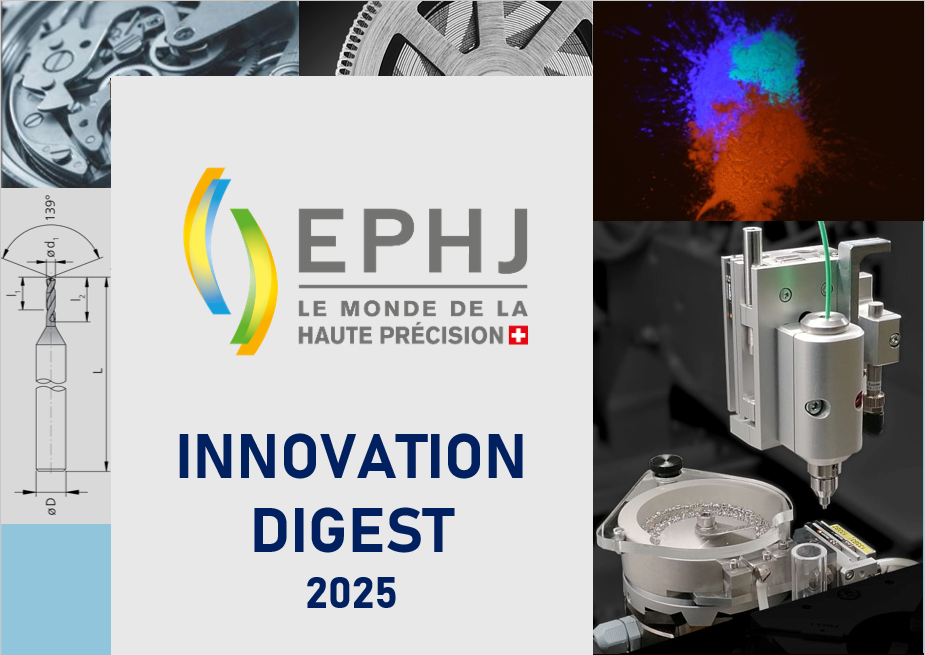
Innovation Digest EPHJ 2025 – The Future of High Precision, Down to the Micron! Published on December 15, 2025 A comprehensive overview of the 85 innovations set to transform watchmaking, jewellery, medtech and microtechnology. The EPHJ Trade Show, a true international platform for high precision, has released its Innovation Digest 2025, a trilingual edition (FR/EN/DE) showcasing 85 breakthroughs unveiled this year by start-ups, SMEs, and leading industry groups. It offers a concentrated view of product, machine, and process advances: extreme miniaturization, surface treatments, new materials, laser applications, data/AI-assisted quality control, and industrial sustainability. These innovations serve the high-precision sectors, helping preserve expertise while boosting competitiveness. ‘This Digest highlights solutions ready for production and ideas ready to grow. It is a working tool for manufacturers, design offices, industrial teams and R&D decision-makers, who will find new ideas and inspiration to accelerate concrete projects,’ emphasises Alexandre Catton, director of the EPHJ trade show. The publication comes at a time when innovation is increasingly recognized as a driver of growth. The 2025 Nobel Prize in Economics honored Joel Mokyr, Philippe Aghion, and Peter Howitt for their research on innovation-led growth, underscoring how technological progress and “disruptive innovation” shape long-term prosperity. Through this non-exhaustive list, this directory, EPHJ continues its mission: to give visibility to excellence, foster cross-pollination between watchmaking, jewellery, microtech, and medtech, and accelerate connections between brands and suppliers. The Innovation Digest complements the show’s other initiatives, such as the Exhibitors’ Grand Prix, the Innovation Forum, and roundtables that make EPHJ the key convergence point for precision expertise and industrialization. Facebook Twitter Youtube Share this article